
What Is an Acute Injury?
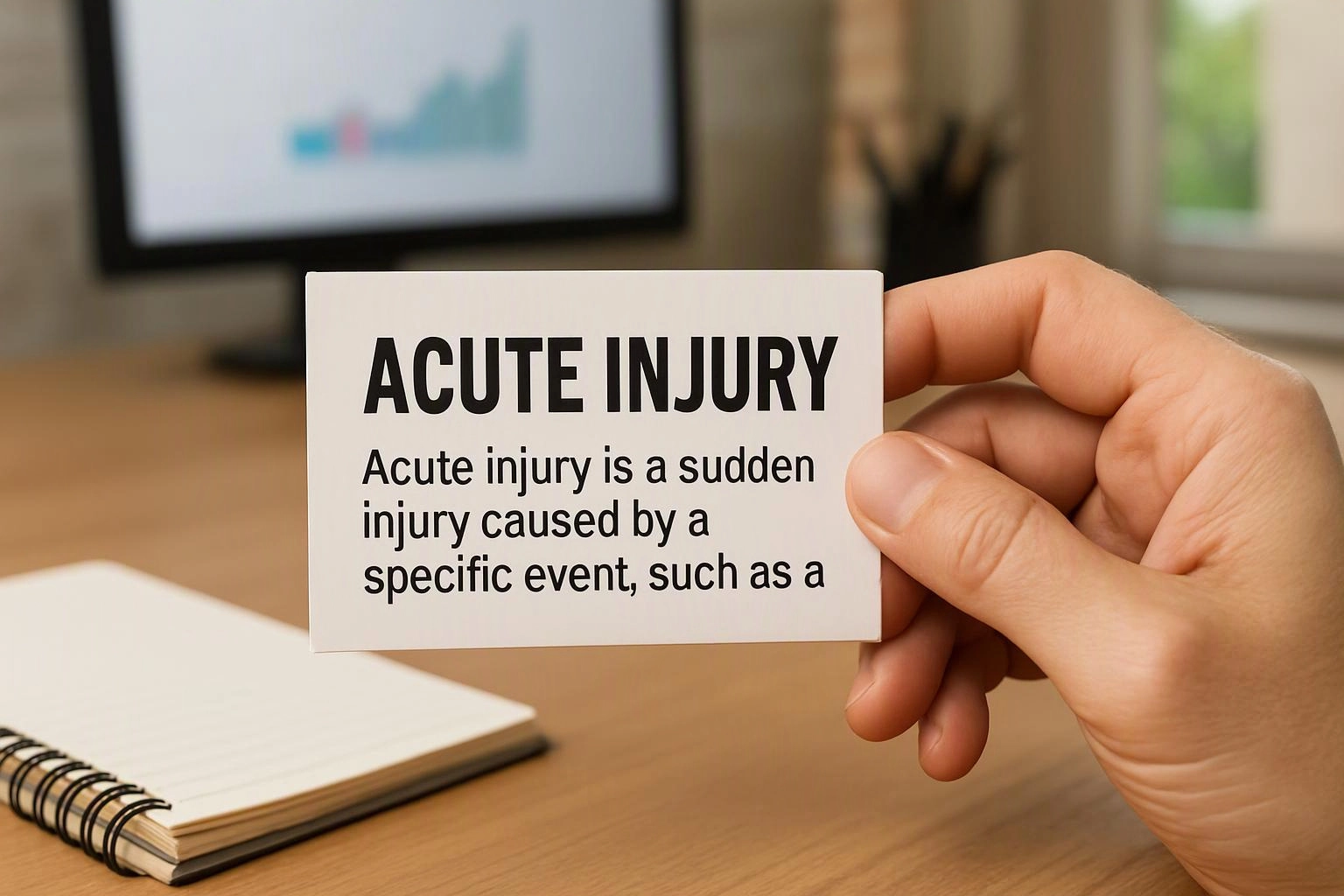
Acute Injury is a sudden injury caused by a specific event, such as a collision, fall, or forceful movement. The injury may affect muscles, ligaments, joints, discs, nerves, or bone. Symptoms often appear quickly, although some develop later. Clinicians assess the event, affected tissues, symptoms, and changes in movement.
Quick Facts About Acute Injury
Category
Injury classification
Used for
Recent event-related injuries
Common confusion
Acute does not mean severe
Also called
Recent injury, Acute trauma
Often discussed with
Personal Injury Treatment, Auto Accident Injury Treatment
Key Takeaways About Acute Injury
- A specific event usually marks the injury.
- Symptoms can involve pain, swelling, stiffness, or altered movement.
- Acute does not describe how severe an injury is.
How Acute Injury Works
Acute injury describes the relationship between a physical event and the symptoms that follow. A collision can strain a muscle or ligament, while a fall can affect a joint, disc, or bone. The affected structure helps explain pain, stiffness, swelling, weakness, or changes in movement.
Related glossary terms: Sprain, Strain, Nerve Compression.
Clinicians examine the reported event, symptom pattern, tenderness, movement, and nerve-related findings. They may also consider whether symptoms appeared immediately or developed after the event. In personal injury treatment, this information helps organize the clinical history and guide further assessment. An acute injury can involve more than one body region, especially after a motor vehicle collision.
From the Arrowhead Clinic Chiropractor McDonough team
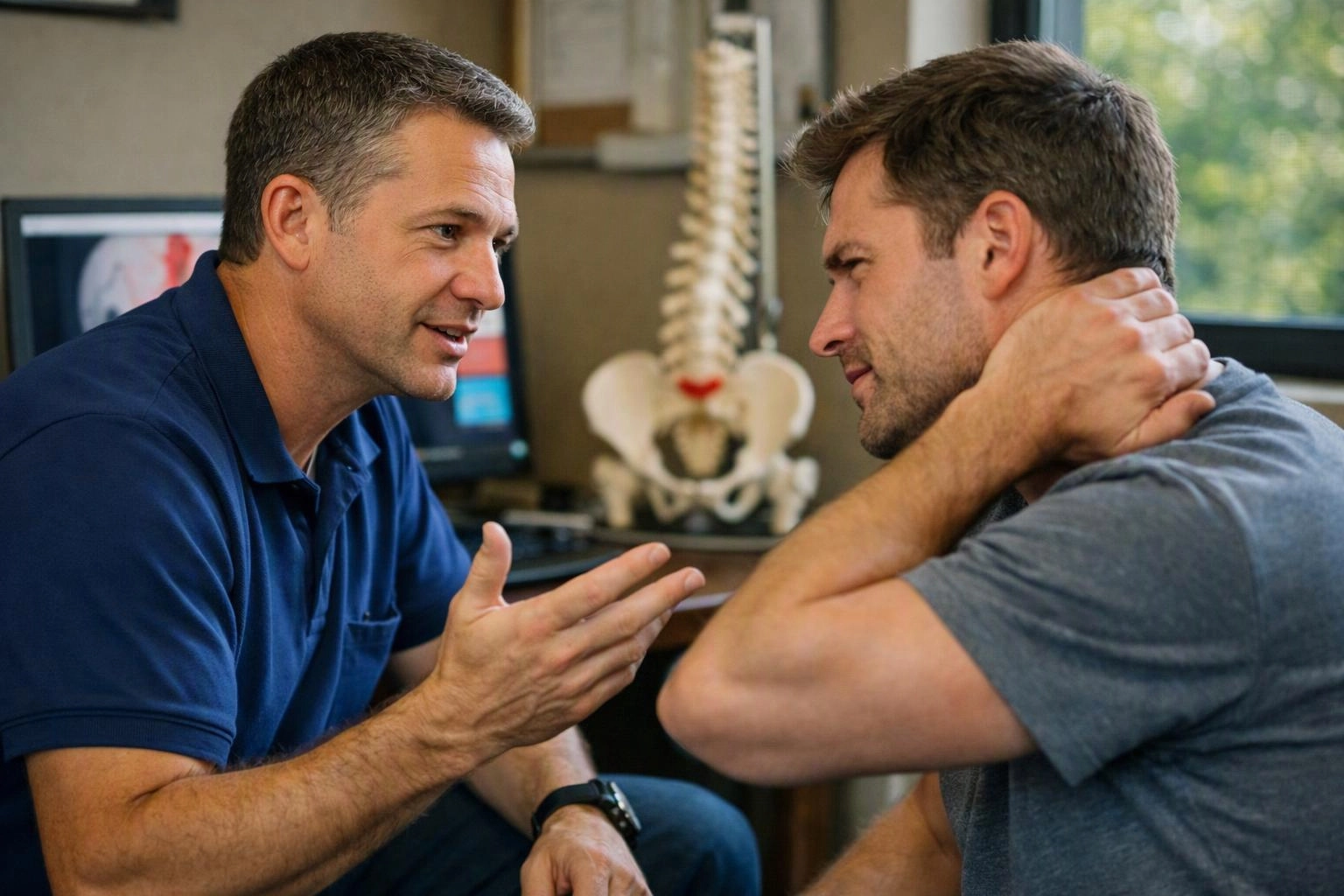
When we assess an acute injury, we connect the reported event with current symptoms and functional changes. We check movement, tenderness, and relevant nerve-related findings while documenting affected regions. Our team uses that clinical picture to guide care within Personal Injury Treatment and to identify issues that may require further evaluation.
Acute Injury in Practice: A Real-World Example
After a rear-end collision, a person develops neck stiffness and upper-back pain. The evaluation focuses on the collision, symptom timing, movement changes, and possible involvement of muscles, joints, or nerves.
Related Services
Related Terms
Sprain
A sprain is an injury to a ligament, the tough tissue that connects one bone to…
Strain
A strain is an injury to a muscle or tendon caused by overstretching, excessive force, or…
Nerve Compression
Nerve compression is pressure placed on a nerve or nerve root by nearby tissue, such as…
Arrowhead Clinic Chiropractor McDonough
Have Questions About Acute Injury?
Contact Arrowhead Clinic Chiropractor McDonough for practical guidance on Acute Injury and related chiropractor work in McDonough.