
What Is an Adhesion?
An adhesion is a band of fibrous connective tissue that may form after injury, inflammation, or surgery and restrict the normal sliding of nearby tissues. In musculoskeletal care, adhesions may involve fascia, muscle, or other soft tissue layers. Their presence can contribute to stiffness, limited motion, or localized tenderness.
Quick Facts About Adhesion
Category
Soft tissue restriction
Used for
Explaining limited tissue mobility
Common confusion
Often confused with a muscle knot
Also called
Scar tissue adhesion, Tissue adhesion
Often discussed with
Myofascial Release Therapy
Key Takeaways About Adhesion
- Adhesions connect tissue layers that normally glide separately.
- Restricted sliding may affect movement and comfort.
- An adhesion is not the same as a muscle knot.
How Adhesion Works
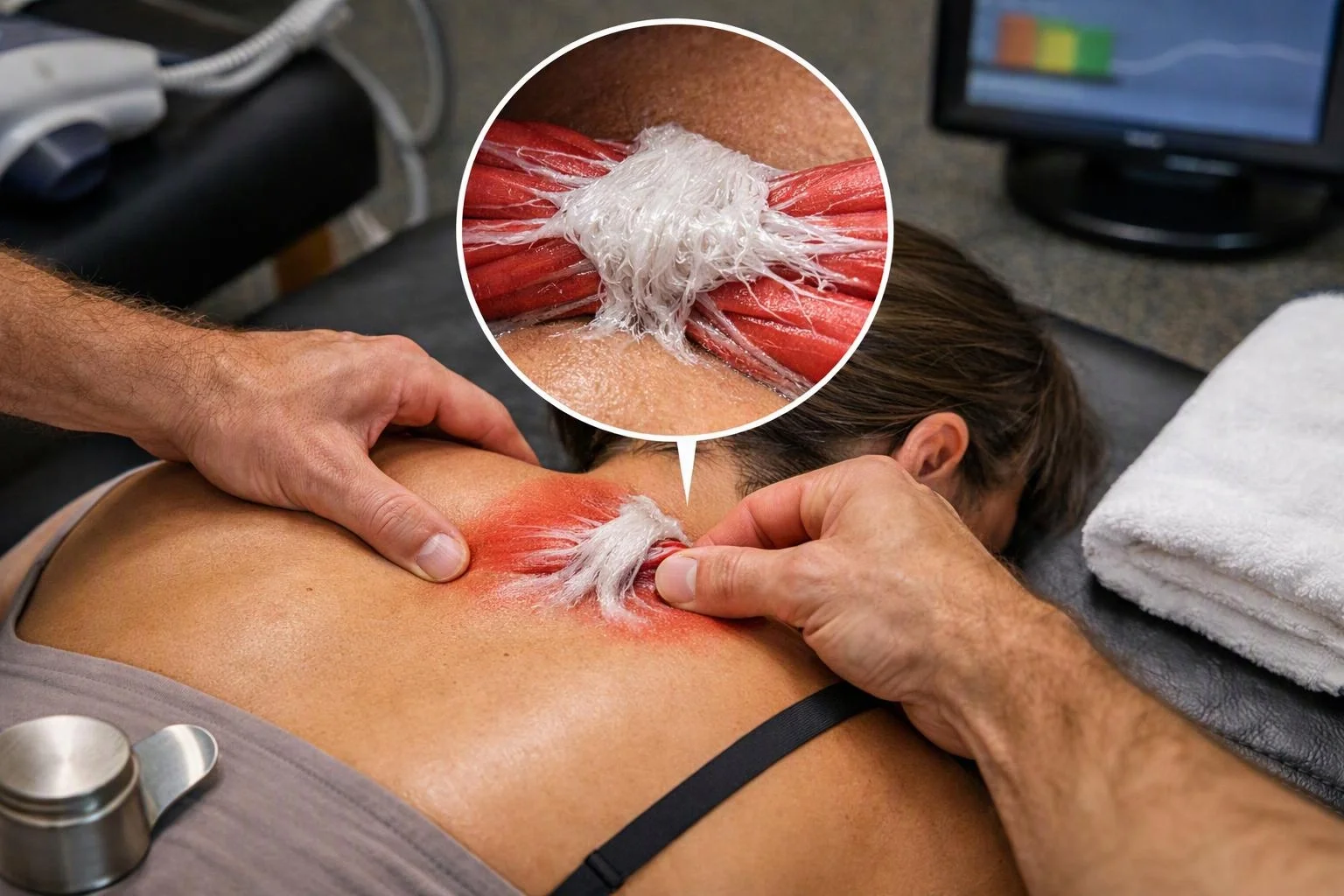
Adhesion describes reduced movement between tissue layers that should glide as the body moves. Scar-like connective tissue may bind nearby surfaces, which can change how force travels through the area. The restriction may feel firm, tight, or tender when the tissue is assessed.
Related glossary terms: Muscle Tension, Range of Motion, Strain.
Fascia surrounds and separates muscles, so an adhesion in this tissue can influence nearby movement without being a problem inside the muscle itself. During Myofascial Release Therapy, a practitioner assesses how the tissue moves and applies controlled pressure to areas that feel restricted. The goal is to support more comfortable tissue motion through gradual manual work.
From the Arrowhead Clinic Chiropractor McDonough team
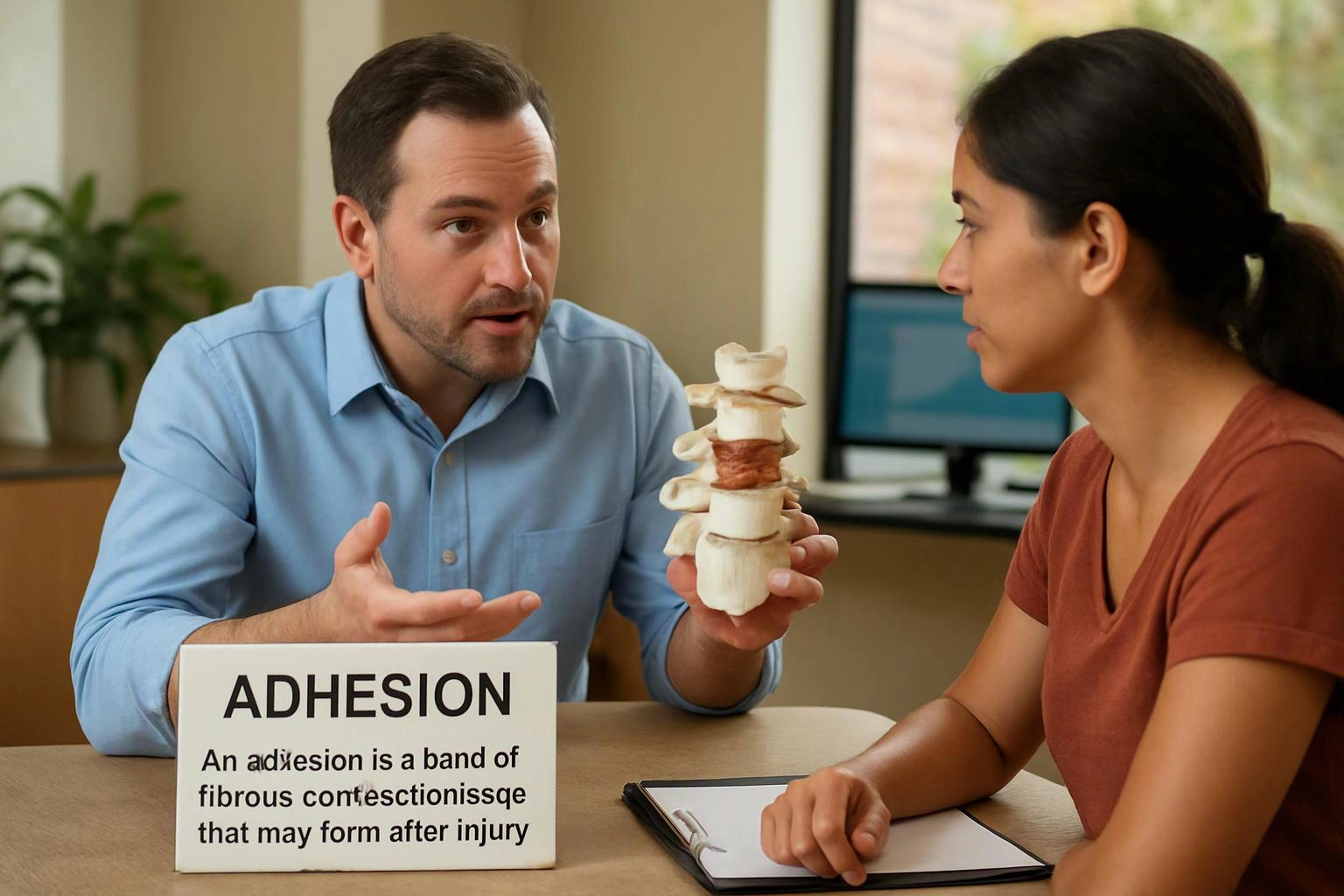
When we assess an adhesion, we check how the surrounding tissue moves and how the area responds to gentle pressure. Our team considers the location, texture, and effect on movement before applying Myofascial Release Therapy. We adjust the technique to the person’s response during the session.
Adhesion in Practice: A Real-World Example
A person with a stiff shoulder may have an adhesion that limits the glide of tissue around the upper back and shoulder. During Myofascial Release Therapy, the practitioner works through the restricted area while observing changes in tissue movement.
Related Services
Related Terms
Muscle Tension
Muscle Tension is a state in which muscle fibers remain partly contracted or feel tight during…
Range of Motion
Range of Motion is the movement available at a joint, measured by how far a body…
Strain
A strain is an injury to a muscle or tendon caused by overstretching, excessive force, or…
Arrowhead Clinic Chiropractor McDonough
Have Questions About Adhesion?
Contact Arrowhead Clinic Chiropractor McDonough for practical guidance on Adhesion and related chiropractor work in McDonough.