
What Is a Muscle Spasm?
A muscle spasm is a sudden, involuntary tightening of muscle fibers that can limit movement and create local pain or stiffness. The contraction may affect a small area, such as a neck muscle, or a larger region, such as the lower back. Spasms can occur after strain, irritation, fatigue, or sustained posture.
Quick Facts About Muscle Spasm
Category
Musculoskeletal symptom
Used for
Describing sudden muscle tightening
Common confusion
General muscle tension
Also called
Muscle cramp, Involuntary muscle contraction
Often discussed with
Pain Management
Key Takeaways About Muscle Spasm
- A spasm involves involuntary muscle tightening.
- Movement patterns and posture can influence symptoms.
- A spasm is not the same as general muscle tension.
How Muscle Spasm Works
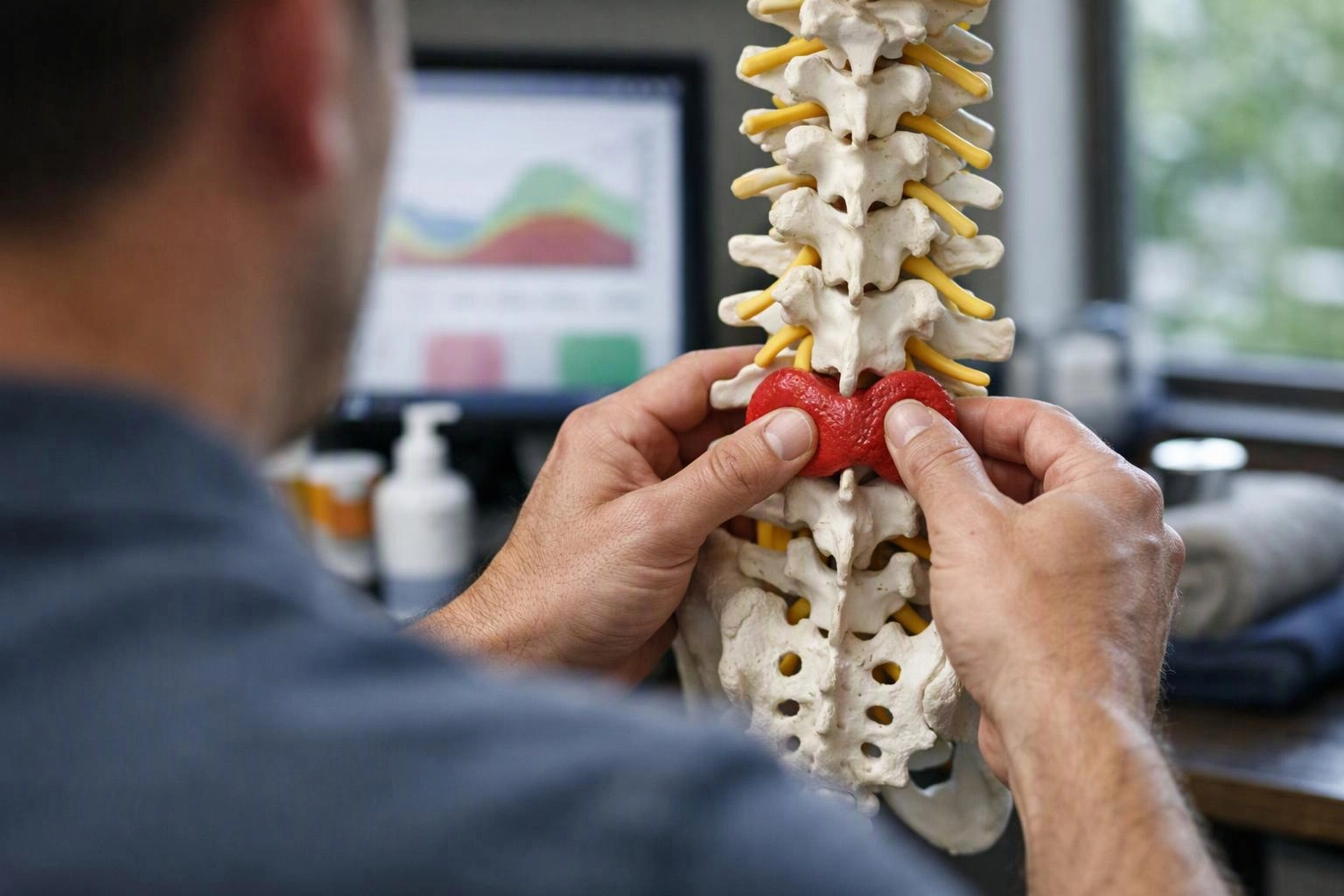
Muscle spasm occurs when nerve signals keep a muscle partly or fully contracted. The affected area may feel firm, knotted, or difficult to move. A spasm can appear after a sudden load, repeated activity, prolonged posture, or irritation near a joint or nerve.
Related glossary terms: Muscle Tension, Strain, Joint Mobility.
Assessment focuses on the location, timing, movement limits, and surrounding tissues. A practitioner may compare active movement with passive movement and check for tenderness or changes in muscle tone. Muscle tension often describes ongoing tightness, while a spasm describes a more sudden or pronounced contraction. Related symptoms can include localized pain, stiffness, or protective changes in movement.

From the Arrowhead Clinic Chiropractor McDonough team
When we assess a muscle spasm, we consider its location, onset, movement pattern, and relationship to nearby joints. We also check surrounding muscle tone and note whether altered posture or restricted motion appears to increase the person’s discomfort.
Muscle Spasm in Practice: A Real-World Example
A person with lower back discomfort may develop a muscle spasm after repeated bending during routine work. The tightened muscles can make standing upright or turning feel restricted.
Related Services
Related Terms
Muscle Tension
Muscle Tension is a state in which muscle fibers remain partly contracted or feel tight during…
Strain
A strain is an injury to a muscle or tendon caused by overstretching, excessive force, or…
Joint Mobility
Joint Mobility is the ability of a joint to move through its available range with coordinated…
Range of Motion
Range of Motion is the movement available at a joint, measured by how far a body…
Arrowhead Clinic Chiropractor McDonough
Have Questions About Muscle Spasm?
Contact Arrowhead Clinic Chiropractor McDonough for practical guidance on Muscle Spasm and related chiropractor work in McDonough.