
What Is the Cervical Spine?
Cervical Spine is the upper section of the vertebral column, located in the neck between the skull and thoracic spine. It contains vertebrae, joints, discs, muscles, ligaments, and nerve pathways that support head movement and connect the brain and body through the spinal cord.
Quick Facts About Cervical Spine
Category
Spinal anatomy
Used for
Assessing neck structure and movement
Common confusion
The neck includes more than the cervical spine
Also called
Neck vertebrae, Cervical region
Often discussed with
Neck Pain Treatment
Key Takeaways About Cervical Spine
- The cervical spine is the neck portion of the backbone.
- Its joints and soft tissues help guide head movement.
- The cervical spine is not the same as neck muscles alone.
How Cervical Spine Works
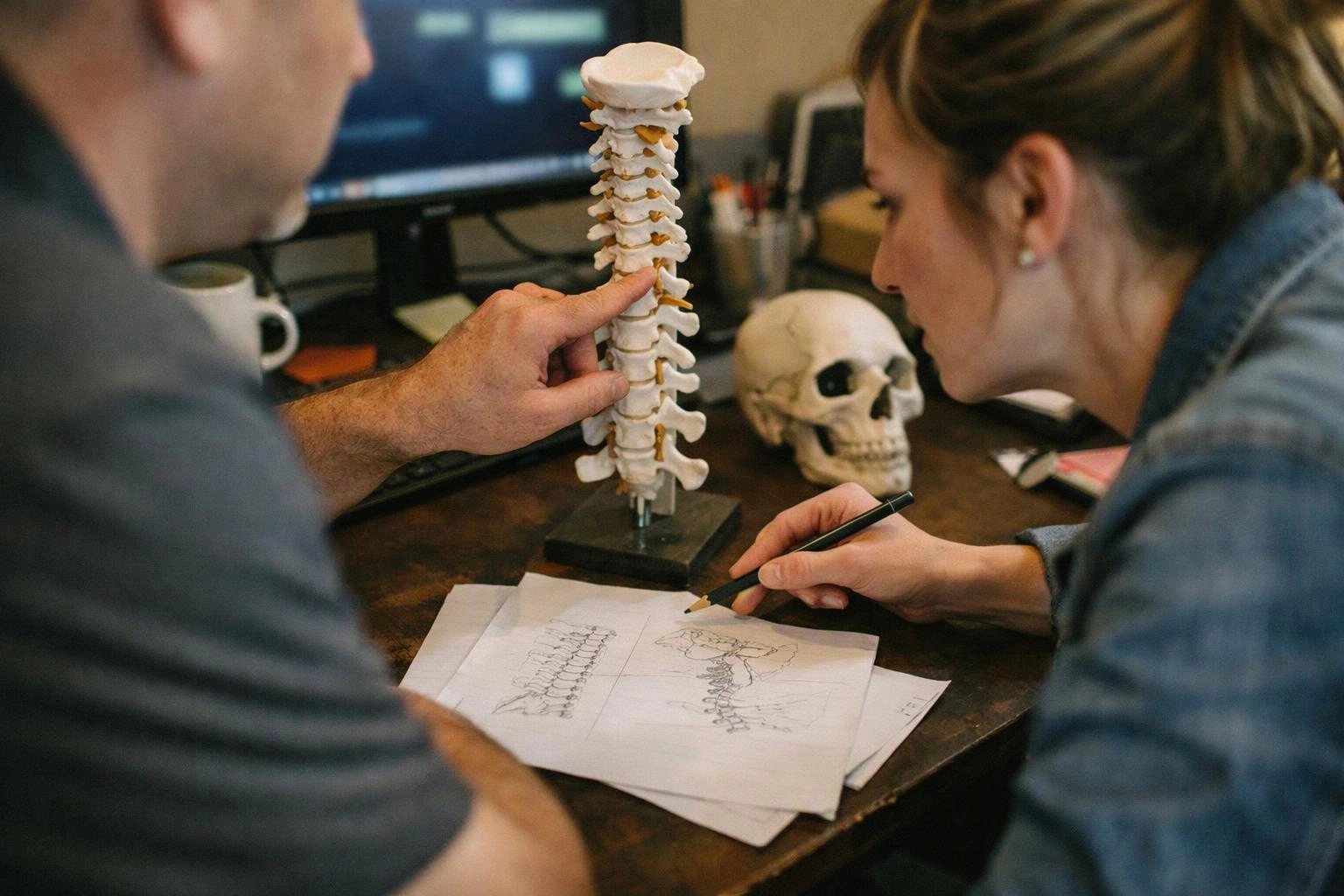
The cervical spine supports the head while allowing controlled movement through the neck. Its vertebrae form a protective passage for the spinal cord, while discs, joints, ligaments, and muscles help distribute motion and load. Nerve roots leave this region and travel toward the shoulders, arms, and hands.
Related glossary terms: Thoracic Spine, Vertebra, Facet Joint.
Clinicians examine cervical spine function by observing posture, active movement, muscle response, and reported symptoms. The cervical vertebrae and facet joints also help explain how stiffness or altered movement may relate to neck pain. Findings from this area are considered alongside the thoracic spine, shoulders, and other nearby structures.
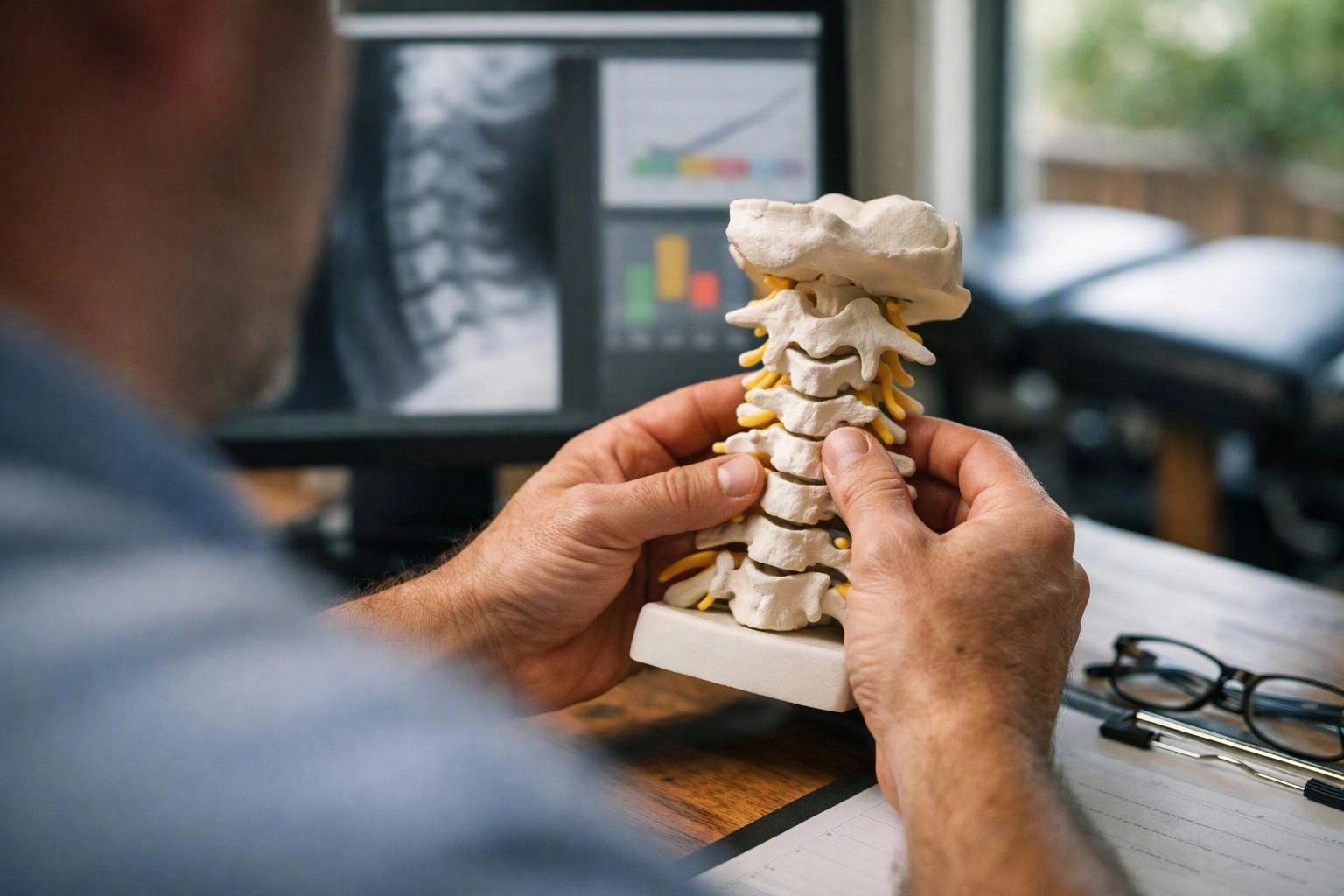
From the Arrowhead Clinic Chiropractor McDonough team
When we assess the cervical spine during neck pain treatment, we consider movement, posture, muscle tension, and the way symptoms travel. We connect those findings with the person’s history and other examination results. This approach helps us distinguish local neck concerns from symptoms that may involve nearby areas.
Cervical Spine in Practice: A Real-World Example
A person with neck pain after extended computer work may show limited rotation and increased muscle tension around the cervical spine. We would consider those findings with the person’s reported symptoms and movement pattern during an evaluation.
Related Services
Related Terms
Thoracic Spine
Thoracic Spine is the middle section of the spinal column, located between the cervical spine in…
Vertebra
A vertebra is a single bone in the spinal column that helps support the body, protect…
Facet Joint
A facet joint is a small paired joint at the back of the spine that connects…
Range of Motion
Range of Motion is the movement available at a joint, measured by how far a body…
Arrowhead Clinic Chiropractor McDonough
Have Questions About Cervical Spine?
Contact Arrowhead Clinic Chiropractor McDonough for practical guidance on Cervical Spine and related chiropractor work in McDonough.