
What Is Alignment?
Alignment is the relative positioning of body structures, especially the vertebrae and joints, as they relate to one another during rest and movement. In chiropractic care, the term describes an observed relationship between these structures, not a promise that every person should match one ideal posture or body position.
Quick Facts About Alignment
Category
Chiropractic assessment concept
Used for
Discussing structural relationships
Common confusion
Not identical to posture
Also called
Body alignment, Structural alignment
Often discussed with
Chiropractic Adjustment
Key Takeaways About Alignment
- Alignment concerns relationships between structures, not a single perfect position.
- Movement and posture can change how alignment appears.
- Alignment is not the same as posture or a diagnosis.
How Alignment Works
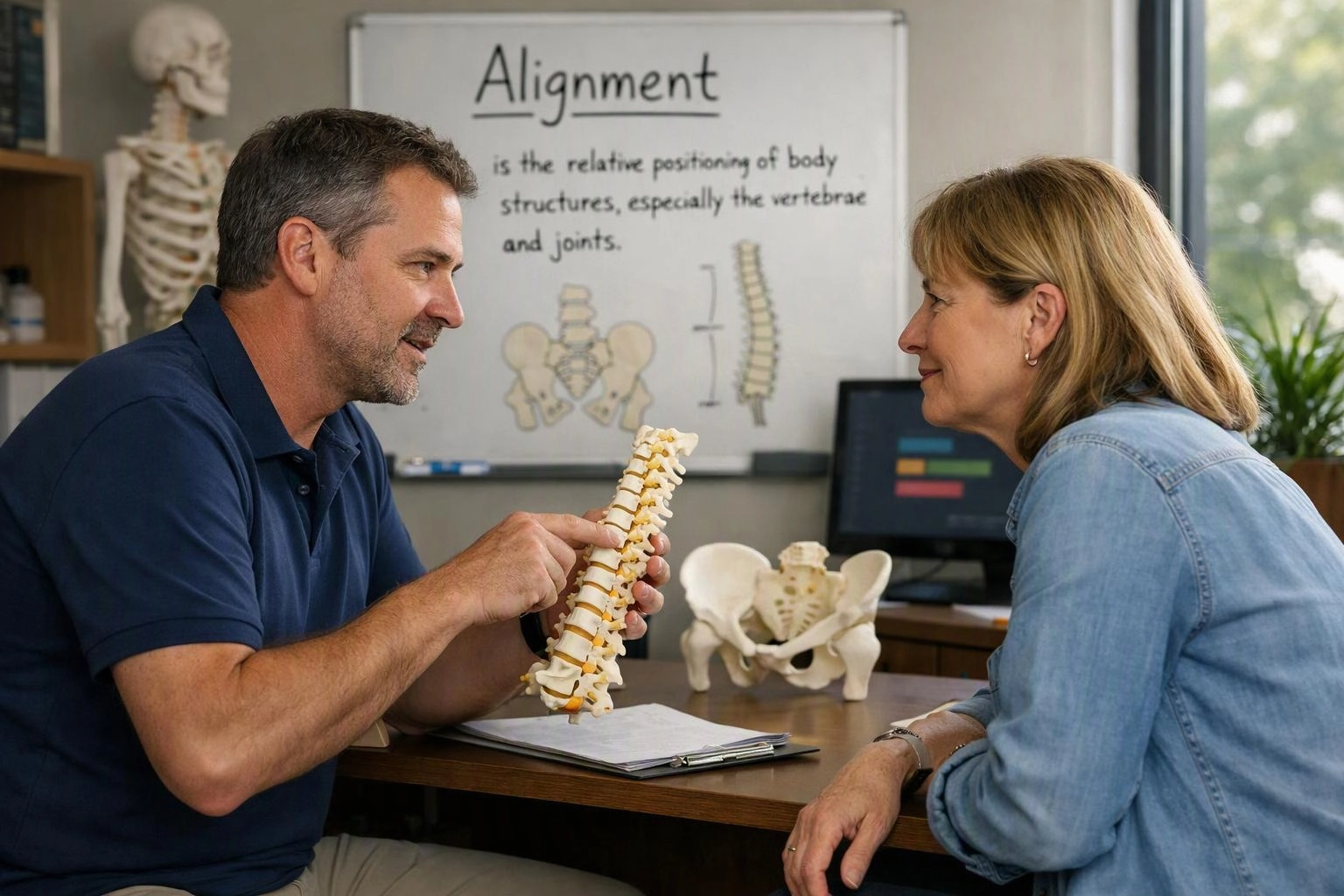
Alignment describes how body structures relate to each other while you stand, sit, walk, or move. A practitioner may observe the position of the spine, pelvis, shoulders, and limbs together. The observation can include posture, joint motion, muscle tension, and movement patterns.
Related glossary terms: Posture, Vertebra, Joint Mobility.
Alignment is understood in context because body position changes with activity and comfort. A vertebra may appear differently during quiet standing than during bending. An assessment may combine visual observation, hands-on findings, and movement checks to describe the relationship between structures. The word does not identify a disease by itself, and it does not mean that one body position suits everyone.
From the Arrowhead Clinic Chiropractor McDonough team
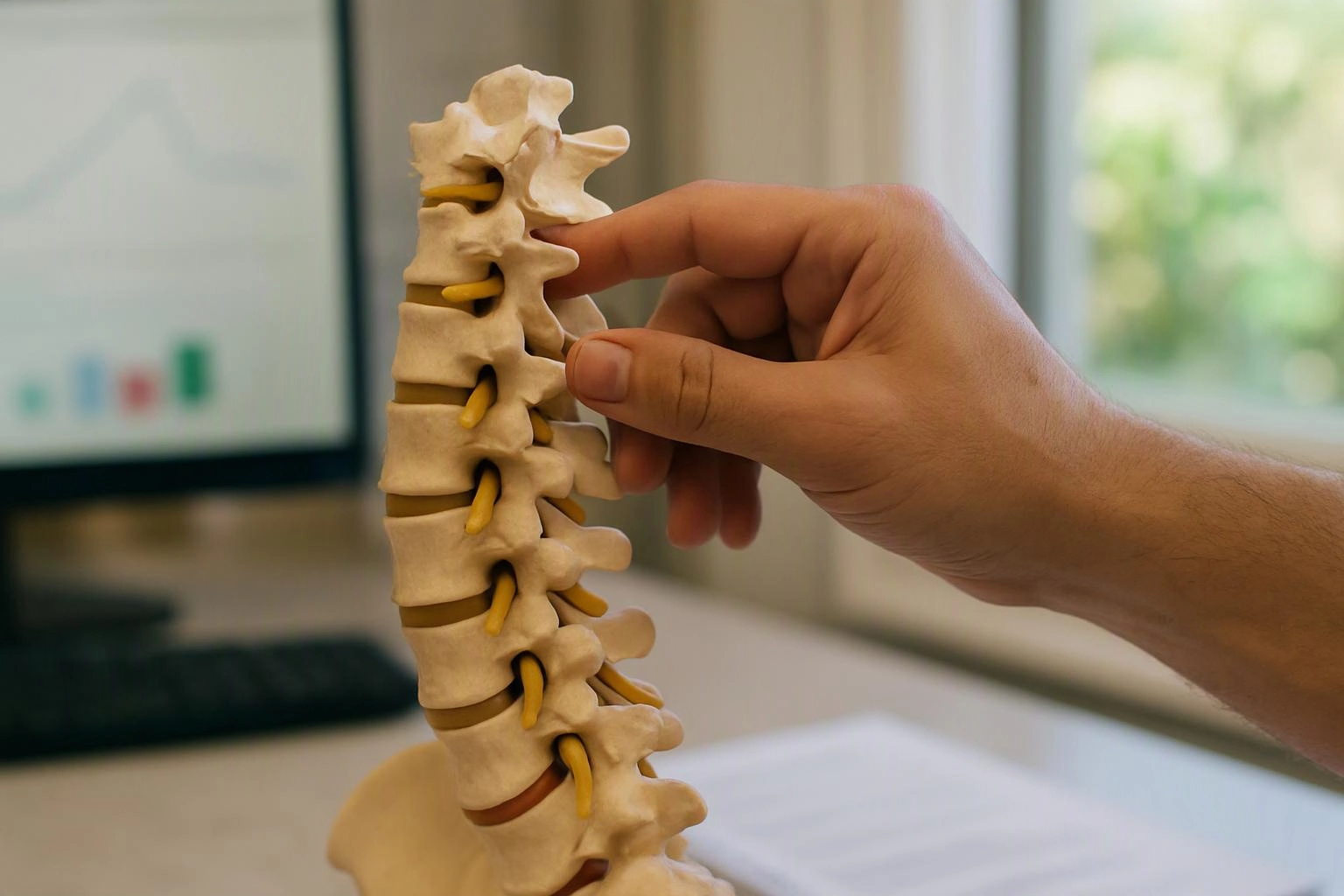
When we assess Alignment during a Chiropractic Adjustment, we consider posture, joint motion, and the person’s reported symptoms together. We check how the relevant area moves and responds, then use those findings to guide the adjustment. Our team treats Alignment as one part of an assessment, not as a stand-alone diagnosis.
Alignment in Practice: A Real-World Example
A person with neck discomfort may show a forward head position while sitting at a desk. During a Chiropractic Adjustment visit, the practitioner may examine neck movement and nearby joint relationships before deciding which areas to address.
Related Services
Related Terms
Posture
Posture is the way you hold and position your body while sitting, standing, walking, or moving…
Vertebra
A vertebra is a single bone in the spinal column that helps support the body, protect…
Joint Mobility
Joint Mobility is the ability of a joint to move through its available range with coordinated…
Forward Head Posture
Forward Head Posture is a postural pattern in which the head rests in front of the…
Arrowhead Clinic Chiropractor McDonough
Have Questions About Alignment?
Contact Arrowhead Clinic Chiropractor McDonough for practical guidance on Alignment and related chiropractor work in McDonough.