
What Is Posture?
Posture is the way you hold and position your body while sitting, standing, walking, or moving. It reflects the relationship among the spine, joints, muscles, and supporting tissues. Posture changes with activity, fatigue, pain, habits, and body structure, so assessment considers movement and position across more than one task.
Quick Facts About Posture
Category
Body alignment and movement pattern
Used for
Observing spinal and joint positioning
Common confusion
Posture is not a fixed body shape
Also called
Body posture, Body alignment
Often discussed with
Chiropractic Adjustment
Key Takeaways About Posture
- Posture includes body position and movement control.
- Daily habits can influence spinal loading.
- Posture is not the same as perfect stillness.
How Posture Works
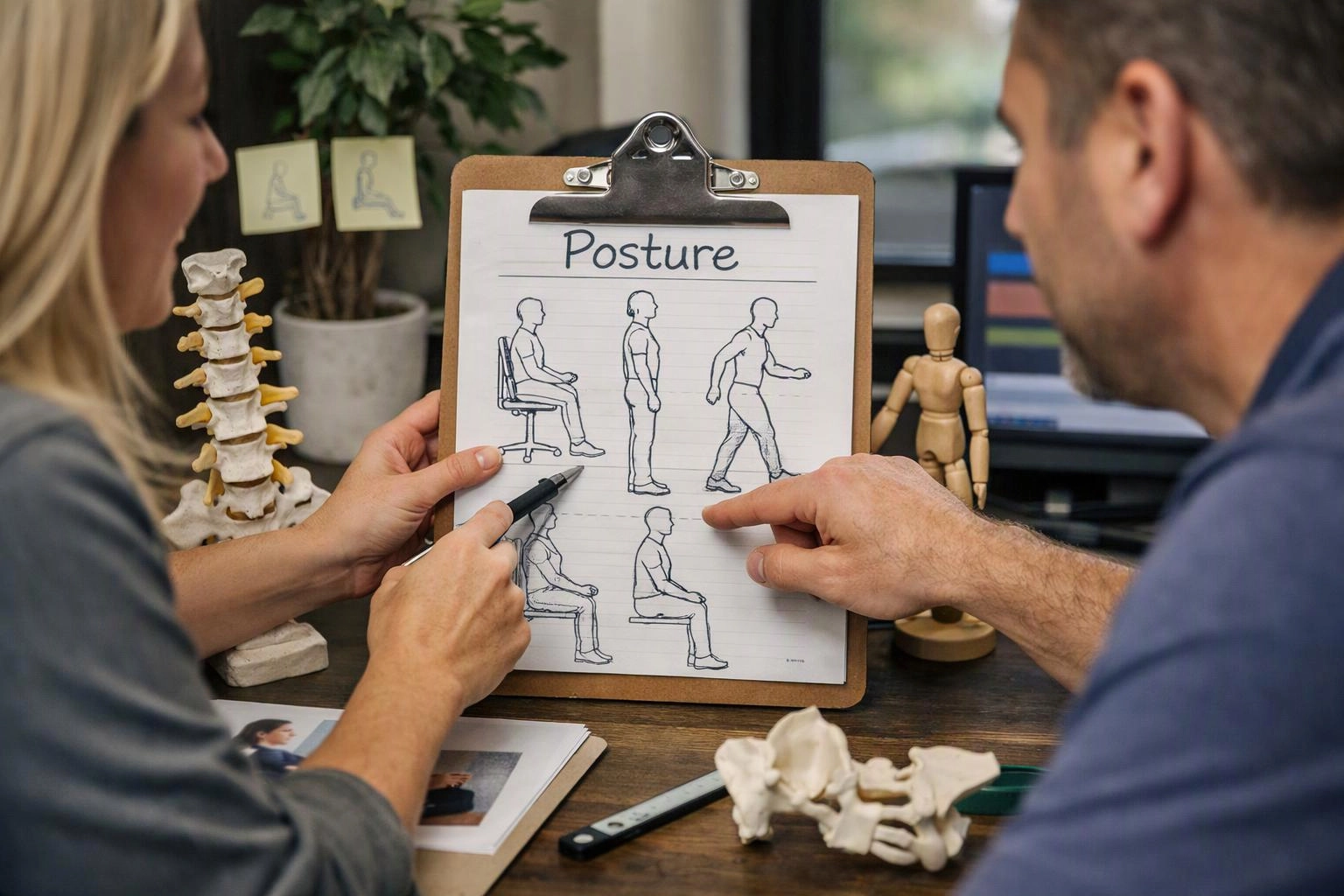
Posture works through coordinated control from the nervous system, muscles, joints, and connective tissues. These systems adjust body position as you sit, stand, walk, reach, or change direction. A posture check may observe the head, shoulders, spine, pelvis, and lower limbs together.
Related glossary terms: Alignment, Forward Head Posture, Kyphosis.
Assessment also considers how the body responds to movement. A person may appear balanced while standing but shift position during a squat, turn, or step. During a Chiropractic Adjustment, posture findings can help describe areas where joint motion or muscle control may differ from the surrounding body. Posture observations support clinical reasoning, but they do not identify a condition by themselves.
From the Arrowhead Clinic Chiropractor McDonough team
When we assess posture, we observe standing alignment and ask how the body moves through ordinary positions. We relate those findings to joint motion, muscle tension, and the person’s reported concerns before planning a Chiropractic Adjustment. We treat posture as one part of the clinical picture, not as a stand-alone diagnosis.
Posture in Practice: A Real-World Example
A person who works at a desk may hold the head forward and round the shoulders while looking at a screen. During a Chiropractic Adjustment visit, the clinician may compare that seated position with standing alignment and neck movement.
Related Services
Related Terms
Alignment
Alignment is the relative positioning of body structures, especially the vertebrae and joints, as they relate…
Forward Head Posture
Forward Head Posture is a postural pattern in which the head rests in front of the…
Kyphosis
Kyphosis is an increased outward curve of the upper spine that can create a rounded back…
Range of Motion
Range of Motion is the movement available at a joint, measured by how far a body…
Arrowhead Clinic Chiropractor McDonough
Have Questions About Posture?
Contact Arrowhead Clinic Chiropractor McDonough for practical guidance on Posture and related chiropractor work in McDonough.