
What Is Numbness?
Numbness is reduced or absent sensation in part of the body. The change may affect touch, pressure, temperature, or pain awareness. Numbness often follows irritation or compression of a nerve, but it can also occur with injury or other health conditions. Its location, pattern, and accompanying symptoms help clarify its significance.
Quick Facts About Numbness
Category
Sensory symptom
Used for
Describing reduced body sensation
Common confusion
Numbness is not the same as tingling
Also called
Loss of sensation, Hypoesthesia
Often discussed with
Personal Injury Treatment, Car Accident Injury Treatment
Key Takeaways About Numbness
- Numbness reflects reduced sensation, not a type of pain.
- Its location and pattern can point toward nerve involvement.
- Tingling and numbness describe related but different sensations.
How Numbness Works

Numbness occurs when sensory signals from a body area do not reach the brain normally, or when the brain does not interpret those signals normally. Pressure on a nerve can alter sensation along the nerve's path. The affected area may feel dull, heavy, less responsive, or unusually distant from normal touch.
Related glossary terms: Nerve Compression, Nerve Root, Paresthesia.
Clinicians consider where the sensation occurs, whether it follows a recognizable pattern, and whether movement or pain changes at the same time. A sensory check may compare light touch, pressure, and the person's report on both sides of the body. Numbness that travels down an arm or leg may suggest involvement near a nerve root or along a peripheral nerve.
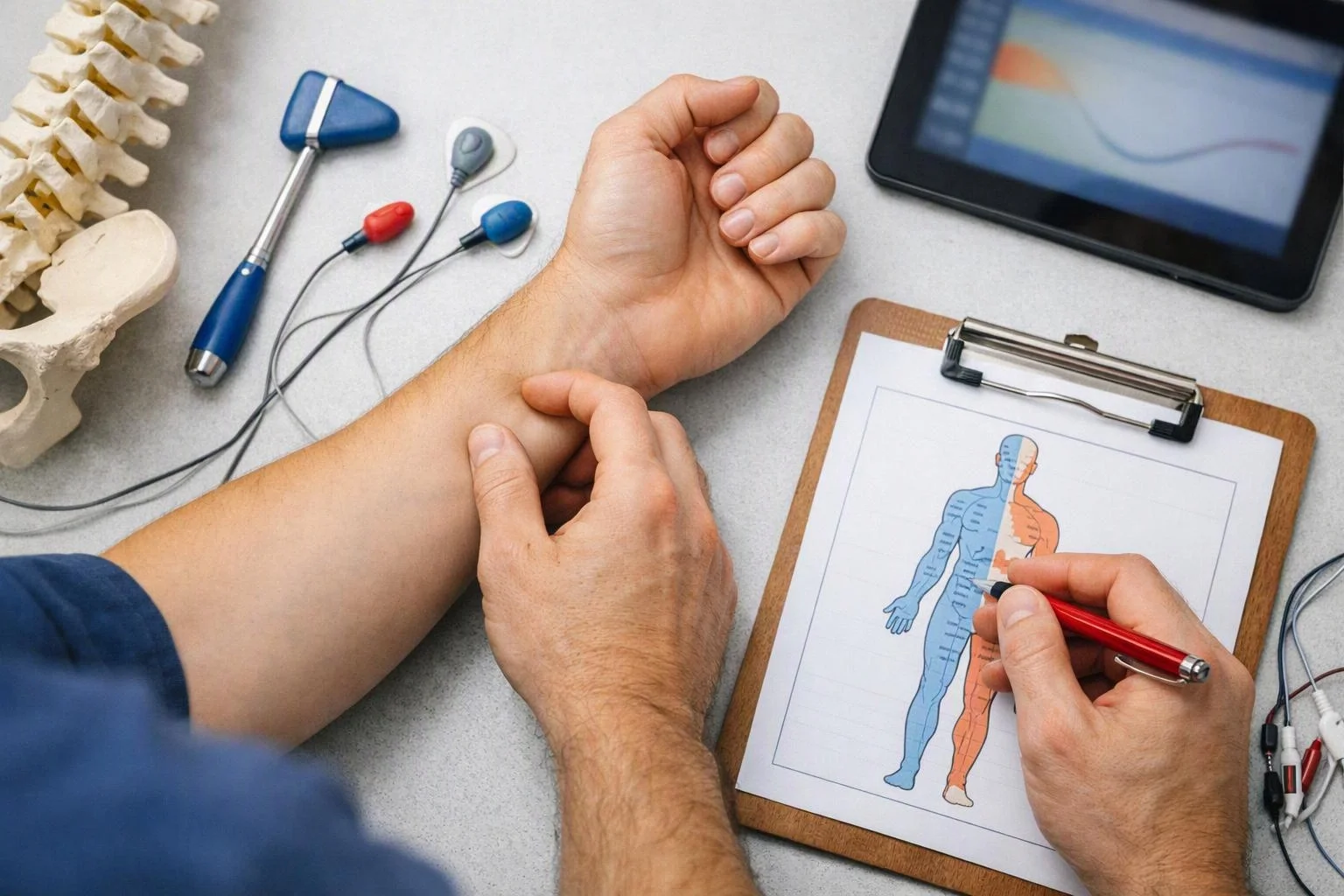
From the Arrowhead Clinic Chiropractor McDonough team
When we assess numbness during Personal Injury Treatment, we ask when the sensation began and map where it travels. We also compare the reported sensation with movement, strength, and pain patterns. That information helps our team distinguish a local complaint from a pattern that may involve a nerve pathway.
Numbness in Practice: A Real-World Example
After a rear-end collision, a person may report reduced feeling along the outer forearm and into the hand. The pattern can help the treatment team examine whether neck or upper-limb structures may be affecting sensory signaling.
Related Terms
Nerve Compression
Nerve compression is pressure placed on a nerve or nerve root by nearby tissue, such as…
Nerve Root
A nerve root is a short section of a spinal nerve that leaves the spinal cord…
Paresthesia
Paresthesia is an altered skin sensation that may feel like tingling, prickling, burning, buzzing, or pins…
Referred Pain
Referred Pain is a pain sensation felt in an area that differs from the tissue or…
Arrowhead Clinic Chiropractor McDonough
Have Questions About Numbness?
Contact Arrowhead Clinic Chiropractor McDonough for practical guidance on Numbness and related chiropractor work in McDonough.