
What Is Paresthesia?
Paresthesia is an altered skin sensation that may feel like tingling, prickling, burning, buzzing, or pins and needles. The sensation can occur without an outside stimulus and may affect an area supplied by an irritated or compressed nerve. In sciatica, paresthesia often follows the path of the sciatic nerve into the buttock, leg, or foot.
Quick Facts About Paresthesia
Category
Neurologic symptom
Used for
Describing altered skin sensation
Common confusion
Paresthesia is not always numbness
Also called
Pins and needles, Tingling sensation
Often discussed with
Sciatica Treatment
Key Takeaways About Paresthesia
- Paresthesia changes sensation without direct skin contact.
- The location may follow an irritated nerve pathway.
- Paresthesia is not the same as complete loss of feeling.
How Paresthesia Works
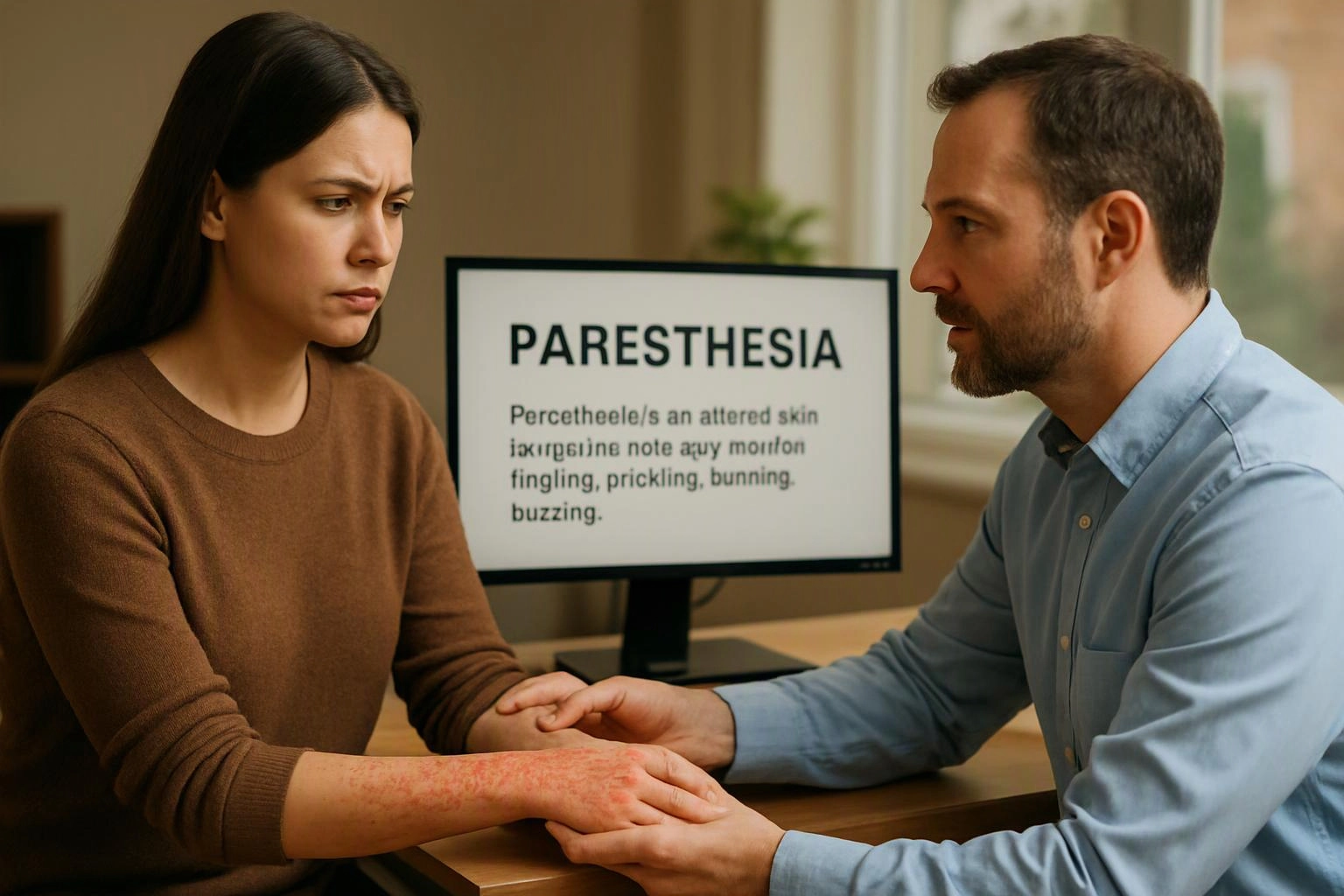
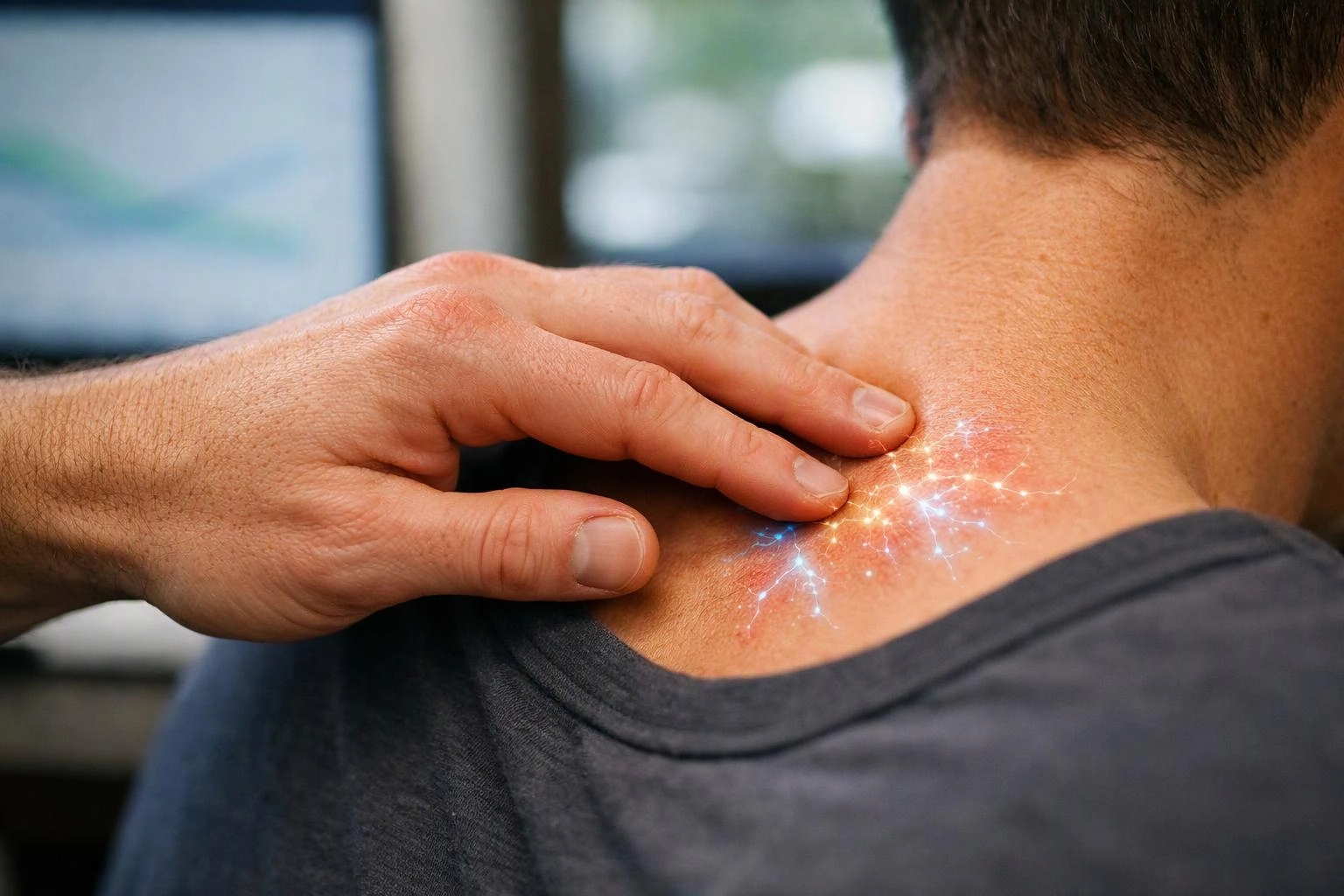
Paresthesia reflects a change in how sensory nerves send or interpret signals. Pressure, irritation, inflammation, or reduced space around a nerve may alter those signals. The brain may then register tingling, burning, buzzing, or prickling in the skin.
Related glossary terms: Nerve Compression, Nerve Root, Numbness.
In sciatica, the sensation may trace part of the sciatic nerve pathway. A clinician considers the reported location, sensation quality, and activities that affect it. The exam may also compare sensation, strength, reflexes, and movement on both sides. These findings help distinguish a nerve-related symptom from muscle soreness or pain referred from another structure.
From the Arrowhead Clinic Chiropractor McDonough team
When we assess paresthesia during sciatica treatment, we ask where the sensation begins and how it travels. We also consider changes in movement, strength, and position. Our team records these details so the treatment plan addresses the affected area and tracks meaningful changes over time.
Paresthesia in Practice: A Real-World Example
A person with sciatica may feel tingling that begins near the lower back or buttock and travels toward the foot. Sitting or bending may change the sensation, while the skin itself may look normal.
Related Services
Related Terms
Nerve Compression
Nerve compression is pressure placed on a nerve or nerve root by nearby tissue, such as…
Nerve Root
A nerve root is a short section of a spinal nerve that leaves the spinal cord…
Numbness
Numbness is reduced or absent sensation in part of the body. The change may affect touch…
Sciatic Nerve
Sciatic Nerve is the body's largest peripheral nerve, formed by nerve roots in the lower spine…
Arrowhead Clinic Chiropractor McDonough
Have Questions About Paresthesia?
Contact Arrowhead Clinic Chiropractor McDonough for practical guidance on Paresthesia and related chiropractor work in McDonough.