
What Is the Sciatic Nerve?
Sciatic Nerve is the body's largest peripheral nerve, formed by nerve roots in the lower spine and extending through the pelvis and buttock into each leg. It carries movement and sensation signals between the lower back, legs, and feet. Irritation or pressure along this pathway may produce sciatica symptoms.
Quick Facts About Sciatic Nerve
Category
Peripheral nerve
Used for
Describing lower-back and leg nerve symptoms
Common confusion
Sciatic nerve versus sciatica
Also called
Ischial nerve, Ischiadic nerve
Often discussed with
Sciatica Treatment
Key Takeaways About Sciatic Nerve
- The sciatic nerve follows a long path from the lower spine into the leg.
- Symptoms may follow the nerve's pathway into the buttock, thigh, or foot.
- Sciatic nerve pain is not the same as every type of leg pain.
How Sciatic Nerve Works
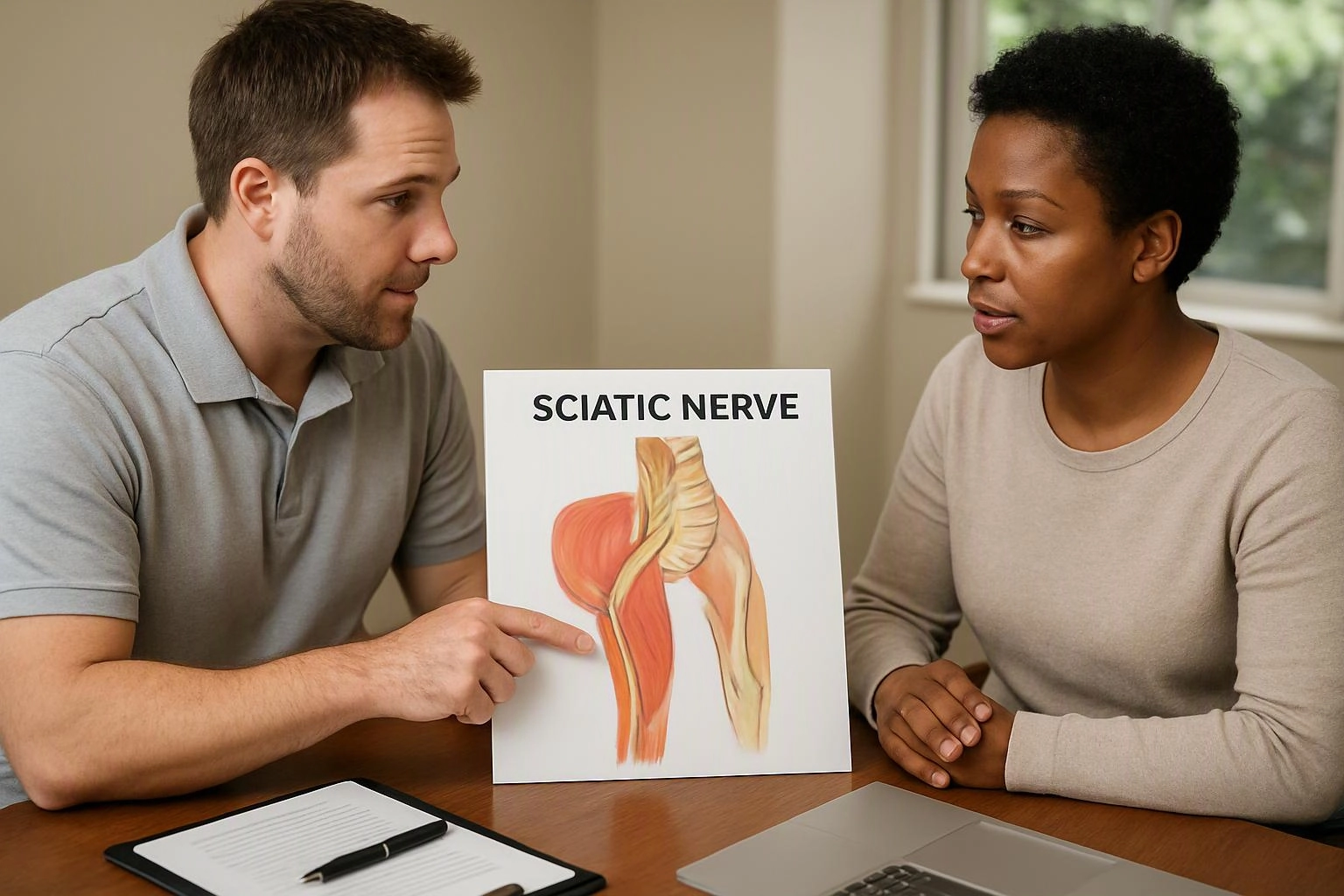
The sciatic nerve begins from connected nerve roots in the lower spine. It passes through the pelvis and buttock before dividing into branches that continue through the leg and foot. These branches carry signals that support sensation and movement in the lower limb.
Related glossary terms: Lumbar Spine, Nerve Root, Nerve Compression.
Pressure or irritation near the lower spine can affect the nerve pathway. A disc bulge, spinal narrowing, or nearby muscle tension may influence symptoms, depending on the affected area. Sciatica describes symptoms linked to this nerve, while the sciatic nerve itself is the anatomical structure. A clinical assessment may review symptom location, sensation, muscle function, spinal movement, and related findings involving the lumbar spine or nerve root.
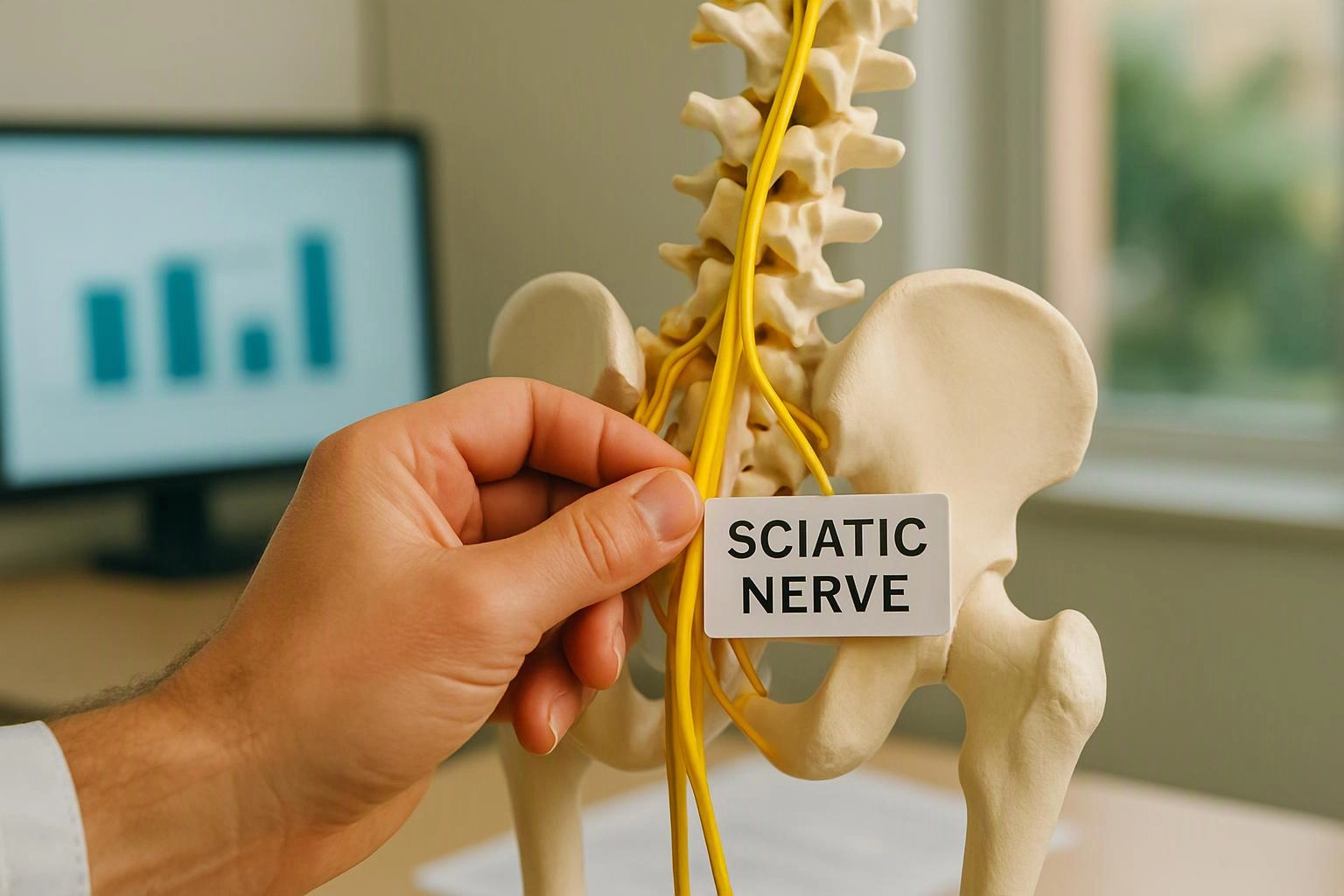
From the Arrowhead Clinic Chiropractor McDonough team
When we assess the sciatic nerve during Sciatica Treatment, we review the symptom pattern and its relationship to spinal movement. We also consider nearby joints, muscles, and nerve roots so the care plan addresses the region involved, not just the area where discomfort is felt.
Sciatic Nerve in Practice: A Real-World Example
A person with a lower-back disc bulge may feel discomfort that travels through the buttock and down the back of the leg. During Sciatica Treatment, the symptom path helps guide the examination of the lumbar spine and surrounding tissues.
Related Services
Related Terms
Lumbar Spine
Lumbar Spine is the lower section of the spinal column between the thoracic spine and the…
Nerve Root
A nerve root is a short section of a spinal nerve that leaves the spinal cord…
Nerve Compression
Nerve compression is pressure placed on a nerve or nerve root by nearby tissue, such as…
Numbness
Numbness is reduced or absent sensation in part of the body. The change may affect touch…
Arrowhead Clinic Chiropractor McDonough
Have Questions About Sciatic Nerve?
Contact Arrowhead Clinic Chiropractor McDonough for practical guidance on Sciatic Nerve and related chiropractor work in McDonough.