
What Is a Nerve Root?
A nerve root is a short section of a spinal nerve that leaves the spinal cord area through an opening between vertebrae. Each nerve root carries signals between the spine and a specific region of the body. Pressure or irritation near this structure may relate to pain, tingling, numbness, or weakness along its pathway.
Quick Facts About Nerve Root
Category
Spinal nervous system structure
Used for
Describing nerve pathways near the spine
Common confusion
Often confused with the spinal cord or sciatic nerve
Also called
Spinal nerve root
Often discussed with
Spinal Decompression Therapy
Key Takeaways About Nerve Root
- Nerve roots exit the spine through openings between vertebrae.
- Symptoms may follow the path served by an affected nerve root.
- A nerve root is not the same structure as the spinal cord.
How Nerve Root Works
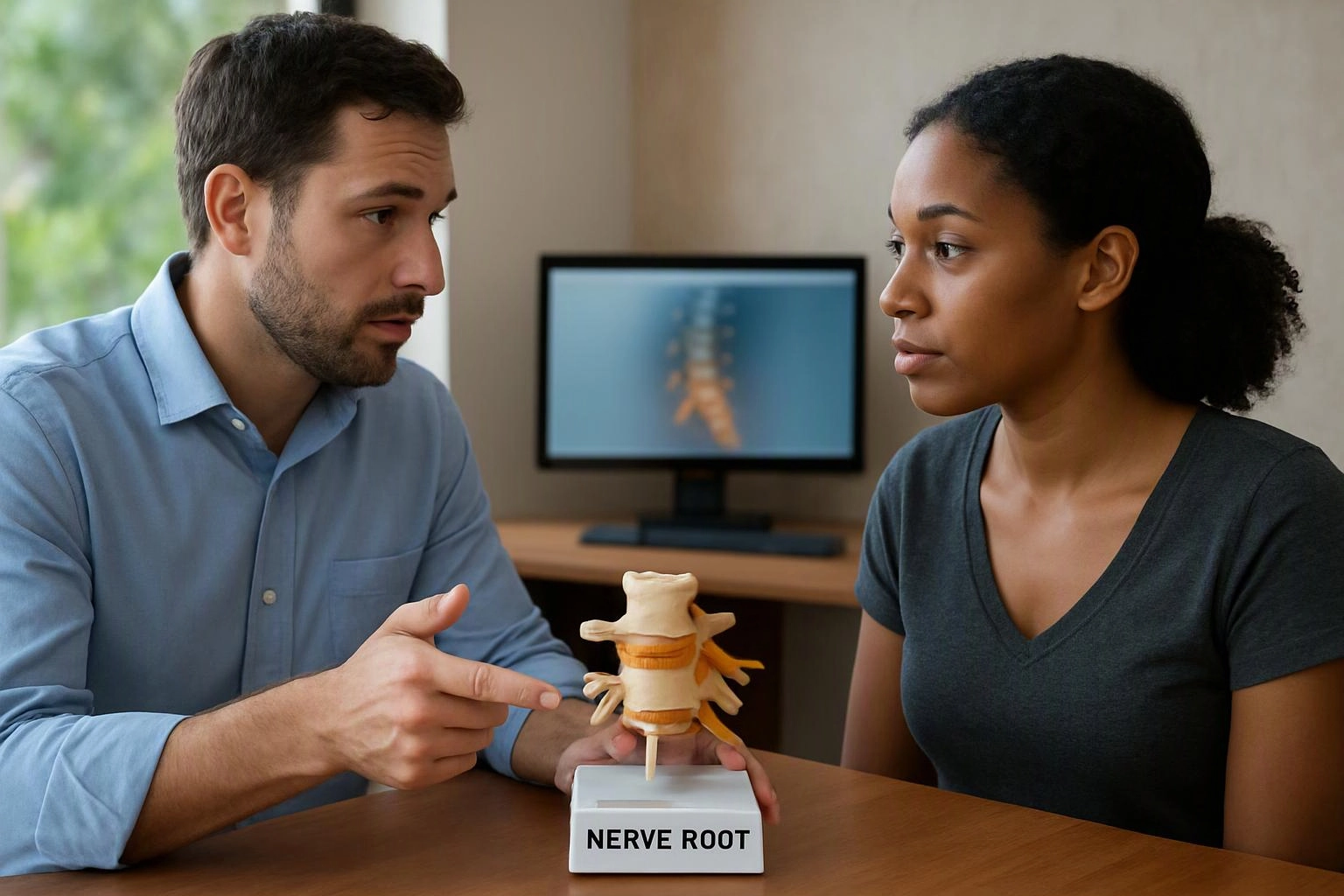
Nerve root tissue carries communication between the spinal cord region and a particular part of the body. A nerve root passes through a small opening near neighboring vertebrae, then joins a larger peripheral nerve. This pathway helps explain why symptoms may travel beyond the exact area near the spine.
Related glossary terms: Nerve Compression, Lumbar Spine, Cervical Spine.
During spinal decompression therapy, the treatment plan considers how nearby spinal structures may affect the nerve root. The clinician reviews symptoms, movement, and other examination findings to understand the pattern. Decompression applies controlled traction to the spine, with the goal of reducing mechanical stress in the treated area. The response helps guide ongoing care.
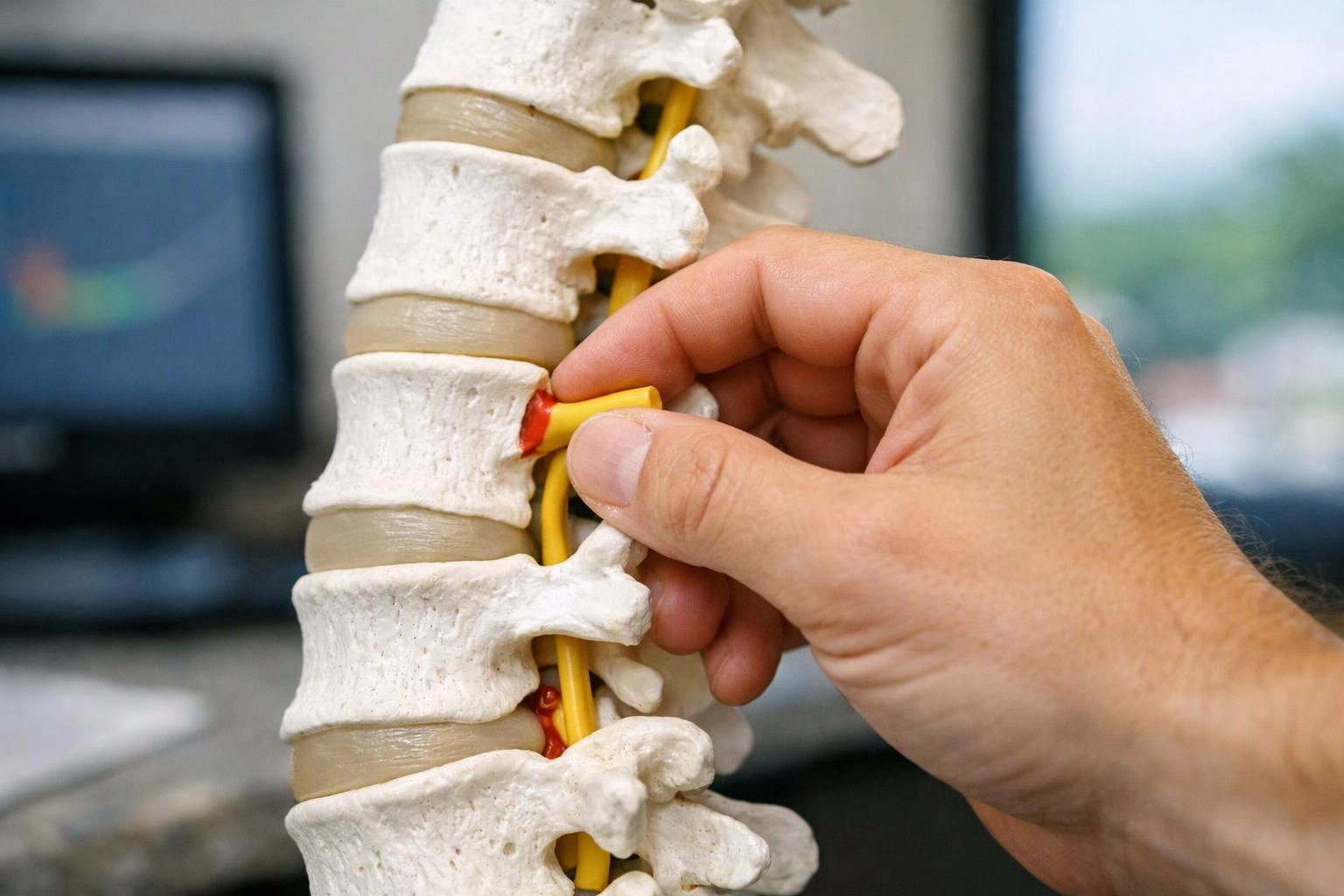
From the Arrowhead Clinic Chiropractor McDonough team
When we assess a nerve root during spinal decompression therapy, we connect the reported symptom pattern with spinal movement and examination findings. We also consider whether the involved area is in the neck or lower back. This distinction helps our team select an appropriate treatment focus and monitor changes during care.
Nerve Root in Practice: A Real-World Example
A person with lower back discomfort may also report symptoms extending into the hip or leg. During spinal decompression therapy, the care plan may focus on the spinal region associated with that nerve root pathway.
Related Services
Related Terms
Nerve Compression
Nerve compression is pressure placed on a nerve or nerve root by nearby tissue, such as…
Lumbar Spine
Lumbar Spine is the lower section of the spinal column between the thoracic spine and the…
Cervical Spine
Cervical Spine is the upper section of the vertebral column, located in the neck between the…
Sciatic Nerve
Sciatic Nerve is the body's largest peripheral nerve, formed by nerve roots in the lower spine…
Arrowhead Clinic Chiropractor McDonough
Have Questions About Nerve Root?
Contact Arrowhead Clinic Chiropractor McDonough for practical guidance on Nerve Root and related chiropractor work in McDonough.