Glossary

What is Spinal Decompression?

Spinal Decompression is a non-surgical treatment designed to relieve pressure on the spine and nerves. It involves gently stretching the spine using a motorized table or device to create negative pressure within spinal discs, promoting healing and pain relief for conditions like herniated discs or sciatica.

Reviewed by Dr. Harry W. Brown, D.C.Sources reviewed: American Chiropractic Association, National Institute of Neurological Disorders and Stroke

Quick Facts About Spinal Decompression

Category

Non-surgical therapy

Used for

Herniated discs, sciatica, spinal stenosis, chronic back pain

Common confusion

Often confused with traction. But decompression targets specific spinal segments

Also called

Decompression Therapy, Non-surgical Spinal Decompression

Often discussed with

Chiropractic Consultation and Diagnosis, Car Accident Injury Rehabilitation

Key Takeaways About Spinal Decompression

Understanding Spinal Decompression

Spinal Decompression in Chiropractor—McDonough

Spinal decompression helps ease pain. It does this by relieving pressure on the spine. This pressure often comes from problems like herniated discs (bulging cushions between bones).

Related glossary terms: Chiropractic, Disc Herniation, Nerve Compression.

Other causes include bulging discs or degenerative disc disease (when discs wear down). These can cause back pain. They can also cause numbness or weakness in arms or legs.

This treatment is not surgery. It doesn’t need cuts, medicine to sleep. Or long recovery. It gently stretches the spine to help it heal.

The stretch creates space. This helps take pressure off nerves. It also helps the body heal itself.

When the spine stretches, it creates a pull inside discs. This can pull bulging disc material back. It helps the disc return to its normal place.

The stretch also lets oxygen, water. And nutrients flow into discs. This helps discs repair themselves. It also reduces swelling.

Spinal decompression is not a quick fix. It’s often part of a bigger plan. This plan may include chiropractic care, therapy. Or lifestyle changes.

How Spinal Decompression Works?

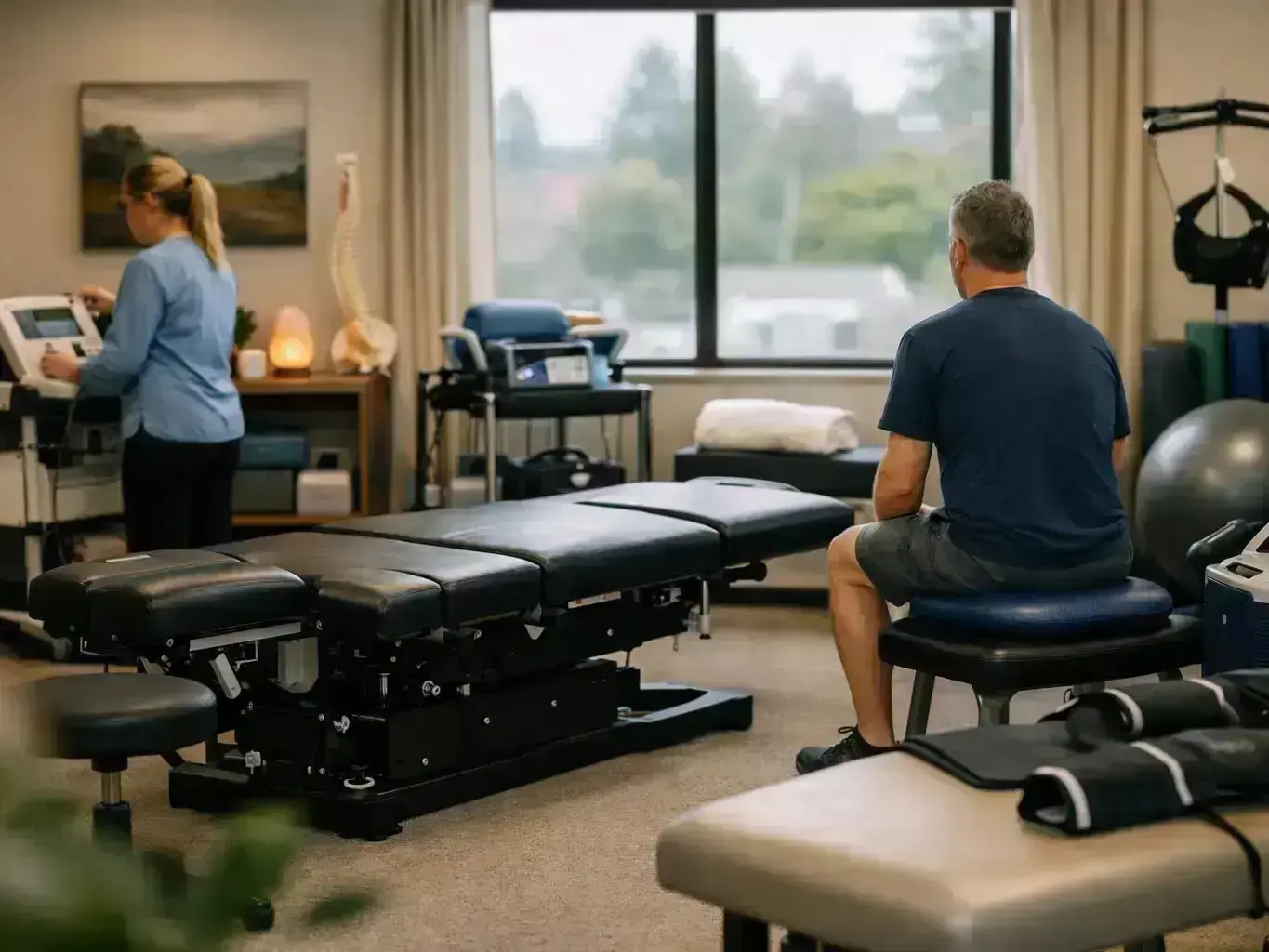
Doctors use a special table for this treatment. The table gently stretches the spine. It does this in a controlled way.

The patient lies on the table. The machine pulls with just the right force. It pulls on the parts of the spine that need help.

The pull comes in cycles. It stretches, then rests, then stretches again. This helps create space between the bones.

The goal is to take pressure off nerves and discs. It does this without causing pain or harm.

The doctor may change the angle of the stretch. They may also change how strong it is. This helps target the problem area.

If the lower back hurts, they focus on that area. The treatment usually doesn’t hurt. Many people feel a gentle pull, then relief.

Each session lasts 20 to 45 minutes. A full plan may take 15 to 30 sessions. This depends on how bad the problem is.

Doctors often add other treatments. These help make spinal decompression work better. For example, they may use electric pulses or sound waves.

These help relax muscles. They also help blood flow better. Chiropractic care may also be part of the plan.

This helps keep the spine aligned. It also helps it move better. These treatments help fix the real cause of the problem.

The causes may be bad posture or muscle issues. They may also be from doing the same motions over and over.

Why Spinal Decompression Matters?

Spinal decompression helps people avoid surgery. It’s for those with long-term back or neck pain. The pain comes from pressure on the spine.

Many people with herniated discs or sciatica have few options. They can live with pain, take medicine. Or have surgery. This treatment offers another choice.

It’s less invasive. It can ease pain and help people move better. It can also improve their daily life.

This treatment can also stop more damage. When discs are squeezed, they dry out. They can’t absorb shock as well. This causes them to wear down over time.

Decompression creates space between bones. This helps discs work like they should. It also helps keep the spine healthy for longer.

This is important for people with tough jobs. It’s also key for athletes or older adults. They are more likely to get spinal injuries or wear-and-tear problems.

When Spinal Decompression Matters Most?

Spinal decompression helps people with long-term pain. Their pain hasn’t gone away with rest, medicine. Or therapy. It works best for nerve pressure problems.

These include herniated discs, bulging discs. Or sciatica. Pressure on nerves causes pain, numbness. Or weakness. Many who are told they need surgery try this first.

It also helps people whose jobs stress their spine. This includes sitting too long or lifting heavy things. It’s good for those who do the same motions over and over.

Decompression can ease strain. It can also stop more damage. Older adults with worn-down discs or narrow spines may find relief.

It can slow these problems. It can also help them move better and feel more comfortable.

But this treatment isn’t for everyone. People with very weak bones shouldn’t try it. Those with broken spines, tumors. Or infections should avoid it.

Pregnant women may need to skip it. So may people with spinal implants. A doctor should check if it’s safe for you.

How to Evaluate Spinal Decompression?

Related Concepts Compared

Spinal Decompression vs. Traction

Traction applies a constant pulling force to the spine. While spinal decompression uses controlled, intermittent stretching to target specific spinal segments.

Spinal Decompression vs. Chiropractic Adjustment

Chiropractic adjustments focus on realigning the spine through manual manipulation, whereas spinal decompression uses mechanical stretching to relieve pressure on discs and nerves.

Spinal Decompression vs. Physical Therapy

Physical therapy often includes exercises and manual techniques to strengthen muscles and improve mobility. While spinal decompression is a passive treatment aimed at relieving spinal pressure.

Expert Note

Spinal Decompression works best when tailored to the patient's specific condition and combined with other therapies like chiropractic care or physical rehabilitation. It’s not a standalone cure but a valuable tool for managing chronic spinal issues.

Common Mistakes or Myths About Spinal Decompression

  • Assuming spinal decompression is a quick fix—it often requires multiple sessions for lasting results.
  • Confusing decompression with traction, which does not target specific spinal segments.
  • Skipping follow-up care, such as exercises or posture correction, which are essential for long-term relief.
  • Choosing a provider without verifying their experience or the quality of their equipment.

Spinal Decompression in Practice: A Real-World Example

A patient with a herniated disc in their lower back experiences radiating pain down their leg, making it difficult to walk or stand for long periods. After undergoing spinal decompression therapy, the pressure on their sciatic nerve decreases, allowing them to move more comfortably and return to daily activities with less pain.

Sources & Further Reading on Spinal Decompression

Related Services

Related Terms

Chiropractic

Chiropractic is a healthcare profession focused on diagnosing and treating musculoskeletal disorders, particularly those related to the spine. Chiropractors use hands-on spinal adjustments and other techniques to improve alignment, relieve pain. And support the body’s natural ability to heal without surgery or medication. Chiropractic care emphasizes the relationship between the spine and nervous system in maintaining overall health.

Disc Herniation

Disc Herniation is a spinal condition where the soft, gel-like center of a spinal disc pushes through a tear in the disc’s tougher outer layer. This can irritate nearby nerves, causing pain, numbness. Or weakness in the back, arms. Or legs. Disc herniations often occur in the lower back or neck and may result from injury, aging.

Nerve Compression

Nerve Compression is a condition where surrounding tissues, such as bones, cartilage, muscles. Or tendons, press on a nerve. This pressure disrupts the nerve’s normal function, causing pain, tingling, numbness. Or weakness in the affected area. Common sites include the spine, wrists. And elbows.

Physical Rehabilitation

Physical Rehabilitation is a structured healthcare process designed to restore strength, mobility. And function after injury, illness. Or surgery. Physical Rehabilitation uses exercises, manual therapies. And assistive tools to reduce pain, improve movement. And help individuals return to daily activities safely and independently.

Arrowhead Clinic Chiropractor

Have Questions About Spinal Decompression?

Contact Arrowhead Clinic Chiropractor for practical guidance on Spinal Decompression and related chiropractor work in McDonough.

+1 770-637-6261