Understanding Disc Herniation
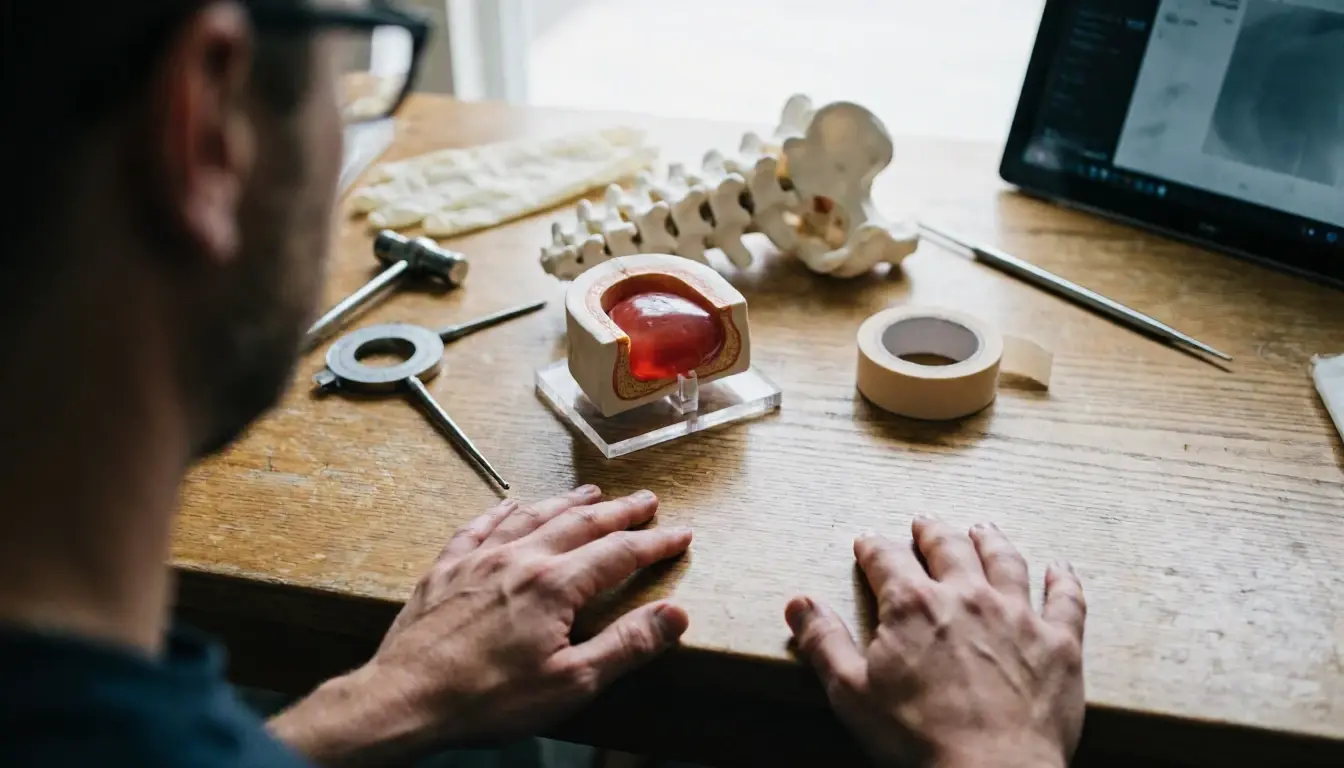
A disc herniation happens when a spinal disc gets hurt. These discs sit between the bones in your back.
Related glossary terms: Spinal Manipulation, Decompression Therapy, Chiropractic Adjustment.
They act like cushions. They help your spine bend and move. Each disc has a tough outer layer.
The outer layer is called the annulus fibrosus (a ring of fibers). Inside is a soft gel. It's called the nucleus pulposus (the gel center).
When the outer layer tears, the gel pushes out. This is a herniation (a bulge). The bulge can press on nerves.
This causes pain, tingling. Or weakness. The pain is in areas the nerves reach.
The lower back is a common place for herniation. This area is called the lumbar spine.
The neck is another common spot. This area is called the cervical spine.
Lower back herniations often cause sciatica. Sciatica is sharp pain down the leg.
Neck herniations may cause arm pain. They can also cause numbness.
Herniations can happen fast. Lifting something heavy can cause it.
They can also happen slowly. Aging and wear can cause them.
Many people get better without surgery. Their symptoms are mild.
How Disc Herniation Works?
A herniated disc often follows an injury. It can also happen from wear over time.
The disc's outer ring weakens. Even small strains can hurt it.
Bending or twisting can push the gel out. The bulge presses on nerves.
This causes swelling and pain. The body can heal itself over time.
The bulge may shrink. This eases pressure on the nerves.
But some bulges are too big. They pinch nerves hard.
Then symptoms may get worse. They may not go away.
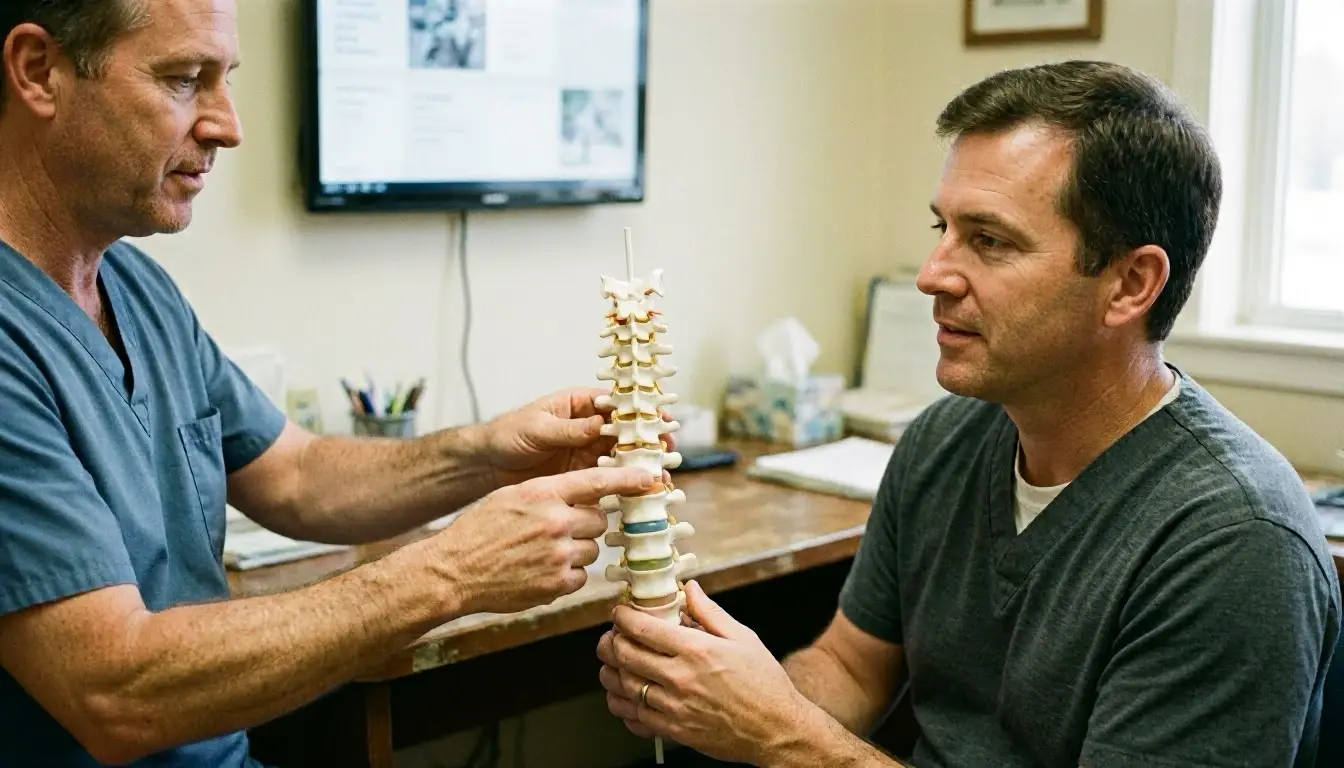
Doctors check for herniation. They ask about your health and symptoms.
They may test your strength. They may check your reflexes (quick body responses).
If needed, they use imaging tests. MRI or CT scans show the problem.
These pictures help find the bulge. They also show how big it is.
Tests rule out other problems. Spinal stenosis (narrow spine) can act the same.
So can fractures (broken bones). Treatment often starts simple.
Rest, ice. And gentle exercises help. Surgery is a last choice.
Why Disc Herniation Matters?
Disc herniation can hurt daily life. Pain or numbness makes things hard.
You may struggle to work or sit. Weakness can stop you from moving well.
Untreated herniations can cause big problems. You may get lasting pain.
You may also get nerve damage. Getting help early can stop this.
Many people feel better without surgery. Physical therapy can help.
So can chiropractic care. Anti-inflammatory drugs (pain medicine) may help too.
Knowing about herniation helps you choose. You can change habits that hurt your back.
Heavy lifting can make it worse. So can sitting too long.
Spotting early signs helps. You can get care sooner.
This lowers the risk of worse problems. Herniation is common.
But it doesn't have to last forever. Many people get better with the right help.
When Disc Herniation Matters Most?
Nerve pressure can cause bad symptoms. Pain may shoot down your leg or arm.
Numbness or weakness can make moving hard. See a doctor right away.
Some signs need emergency care. Can't control your bladder or bowels?
Have very weak muscles? These may mean a serious problem.
It's called cauda equina syndrome. It's rare but needs quick help.
Some people are at higher risk. Athletes and construction workers may get hurt.
So may people who sit all day. Early signs include stiffness or pain.
Tingling is another sign. Spotting them early helps.
It can stop more injury. Older adults may get herniations too.
This happens as their spines age. Check-ups help keep spines healthy.