
What Is Disc Degeneration?
Disc Degeneration is a gradual change in the spinal discs that reduces their normal water content, flexibility, or height. Spinal discs sit between the vertebrae and help distribute pressure during movement. Degeneration may occur with aging, repeated strain, or injury, and imaging findings do not always match the level of pain or other symptoms.
Quick Facts About Disc Degeneration
Category
Spinal disc condition
Used for
Describing disc changes and related symptoms
Common confusion
Not identical to a disc herniation
Also called
Degenerative disc disease, Intervertebral Disc Degeneration
Often discussed with
Spinal Decompression Therapy, Back Pain Treatment
Key Takeaways About Disc Degeneration
- Disc degeneration affects the disc’s structure, not automatically the source of pain.
- Symptoms depend on nearby nerves, joints, muscles, and movement demands.
- Disc degeneration is not the same as a disc herniation.
How Disc Degeneration Works
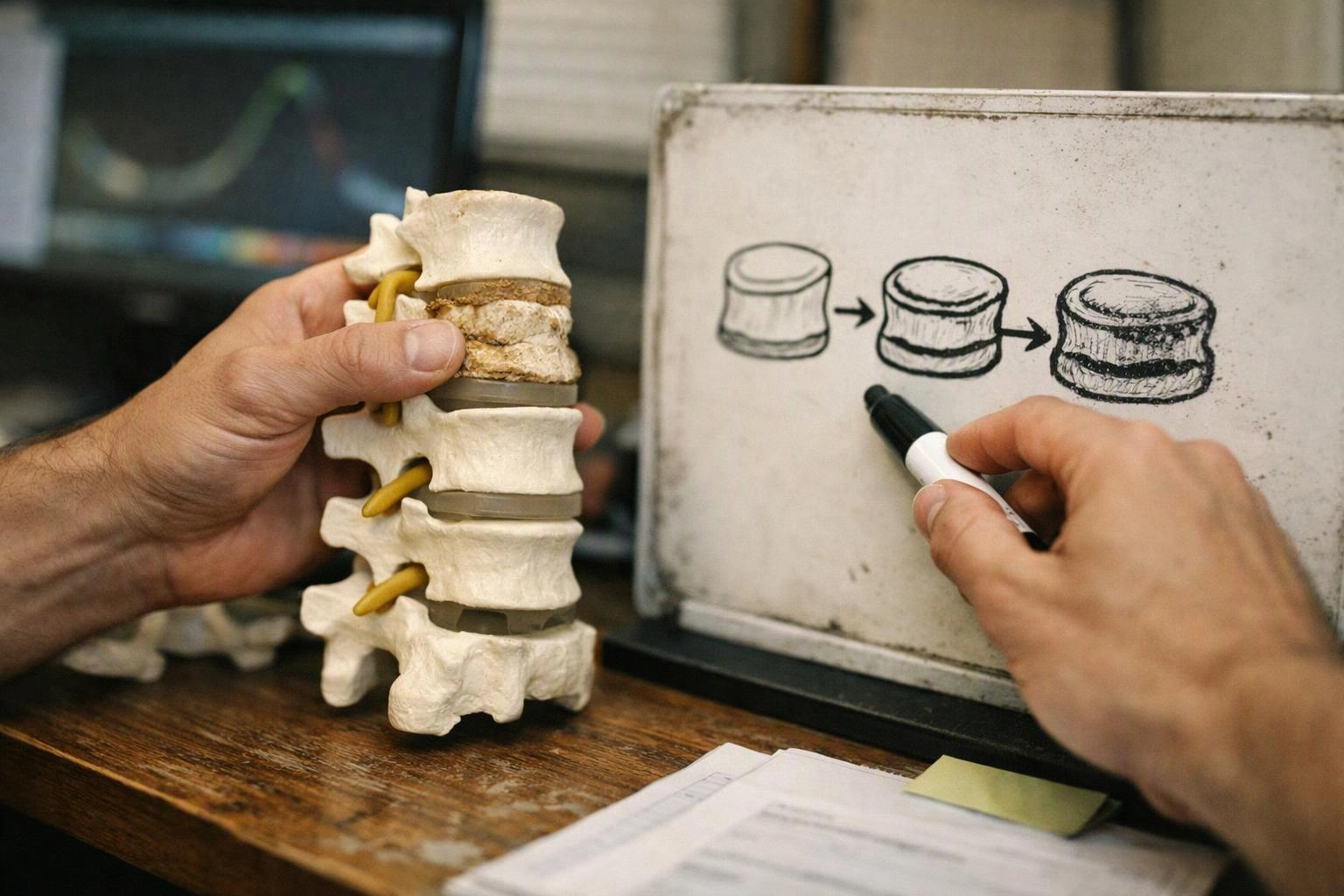
Disc degeneration develops as a spinal disc changes in structure and becomes less able to manage pressure during movement. The disc’s outer ring and inner material may lose flexibility or height. These changes can alter how nearby vertebrae and joints move.
Related glossary terms: Disc Bulge, Lumbar Spine, Nerve Compression.
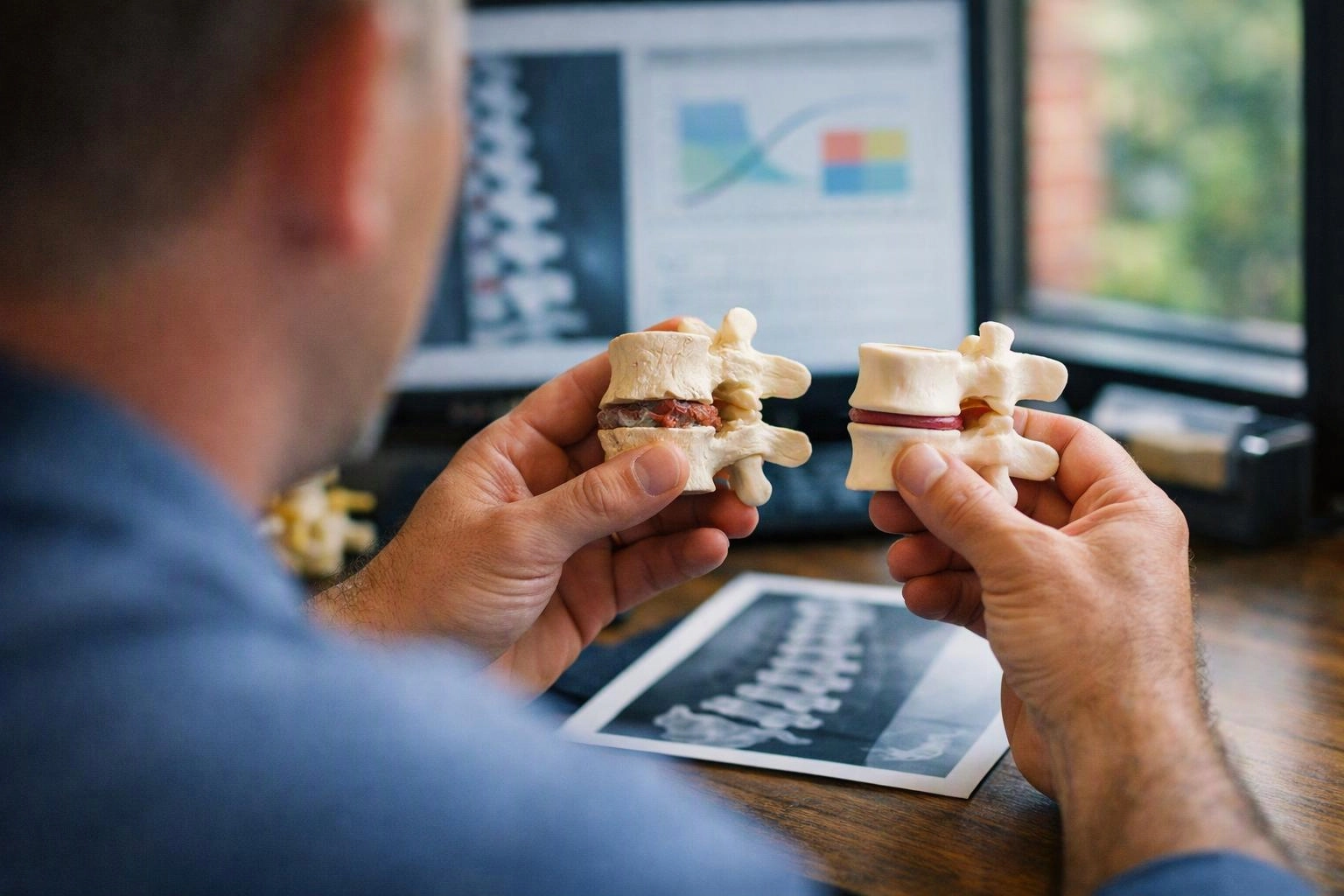
Healthcare professionals assess the condition through a combination of symptoms, physical findings, movement patterns, and imaging when appropriate. An image may show disc changes without explaining every symptom. Spinal decompression therapy focuses on controlled unloading of the spine, which may be considered when disc-related pressure or limited movement forms part of the clinical picture. The treatment plan depends on the person’s findings and response.
From the Arrowhead Clinic Chiropractor McDonough team
When we assess disc degeneration, we review the person’s history, movement, symptoms, and available imaging together. We look for findings that may connect disc changes with restricted motion or nerve-related complaints. When spinal decompression therapy fits the clinical picture, we include it within a broader care plan and monitor the response.
Disc Degeneration in Practice: A Real-World Example
A person with low back stiffness may have imaging that shows disc degeneration in the lumbar spine. During spinal decompression therapy, the team may focus on controlled unloading while also considering movement limits and symptoms that could involve nearby joints or nerves.
Related Services
Related Terms
Disc Bulge
A Disc Bulge is a condition in which the outer wall of an intervertebral disc extends…
Lumbar Spine
Lumbar Spine is the lower section of the spinal column between the thoracic spine and the…
Nerve Compression
Nerve compression is pressure placed on a nerve or nerve root by nearby tissue, such as…
Traction
Traction is a controlled pulling force applied to the spine or a joint to create space…
Arrowhead Clinic Chiropractor McDonough
Have Questions About Disc Degeneration?
Contact Arrowhead Clinic Chiropractor McDonough for practical guidance on Disc Degeneration and related chiropractor work in McDonough.