Chiropractor vs Doctor for Back Pain: Where to Start and When to Seek Medical Care
Back pain care requires choosing between or coordinating chiropractic evaluation and medical evaluation. Arrowhead Clinic Chiropractor McDonough evaluates suitable cases for chiropractic care and directs urgent or medically complex concerns to medical care. The right starting point depends on symptoms, warning signs, trauma, neurological changes, and the likely cause of the pain.
Written by Dr. Robbyn Keating, DC
Get a Free EstimateShould You See a Chiropractor or Doctor for Back Pain First?
Back pain should be evaluated by a medical doctor first when serious warning signs, major trauma, severe neurological symptoms, or a complex medical condition may be involved. Chiropractic care may be a starting point for uncomplicated musculoskeletal pain.
A chiropractor focuses on the spine, joints, muscles, movement, and other features of a musculoskeletal condition. A medical doctor evaluates broader health concerns, including infection, fracture, systemic illness, medication needs, and conditions that may require diagnostic testing.
Options at a glance help make the first decision clear:
Chiropractor vs Doctor for Back Pain: Quick Comparison
Chiropractic care focuses on musculoskeletal assessment and conservative treatment. Medical care evaluates broader causes, serious conditions, medication needs, and advanced diagnostic needs.
| Factor | Chiropractic care | Medical evaluation | Best fit |
|---|---|---|---|
| Cost drivers | Evaluation, treatment plan, visit complexity, and coverage | Evaluation, testing, medication, referrals, and coverage | The option that matches the clinical need |
| Care timeline | Conservative care may continue as symptoms and movement are monitored | Testing or referral may guide the next step | The path that addresses the cause safely |
| Maintenance | May include movement guidance when clinically appropriate | May include follow-up, medication review, or condition monitoring | The plan supported by examination findings |
| Best for | Mechanical back pain and limited mobility | Warning signs, illness, trauma, or complex symptoms | A coordinated decision based on risk |
Chiropractic care is best for suitable musculoskeletal symptoms. Medical evaluation is best when broader testing or medical treatment may be needed.
What Chiropractic Care Can Help With
Chiropractic adjustment is a hands-on treatment that may support spinal movement and joint mobility when the examination suggests a mechanical source of pain.
We assess how the spine, pelvis, joints, and muscles move together. Our care may address muscle tension, limited mobility, and mechanical back pain through conservative treatment, movement guidance, and spinal manipulation when appropriate.
Back Pain Treatment may be suitable when low back pain changes with posture, activity, or movement and does not include serious warning signs. Radiating pain, numbness, tingling, or weakness requires careful screening before treatment.
Advantages of Starting With a Chiropractor
A chiropractic evaluation can provide a focused starting point for back pain that appears related to movement, joints, muscles, or posture. We use the findings to shape conservative care or recommend medical referral.
Best for: uncomplicated musculoskeletal pain without red flags or signs of a serious spinal injury.
What Medical Care Can Evaluate
Medical evaluation can assess neurological symptoms, infection, fracture, systemic illness, and medication needs that may fall outside conservative musculoskeletal care.
A medical doctor may review your medical history, order diagnostic testing, manage prescription medication, or coordinate care for a spinal injury. Medical evaluation is especially important when back pain occurs with fever, unexplained illness, significant trauma, or progressive changes in strength or sensation.
We consider these factors during screening and direct medically complex concerns to the appropriate medical care before chiropractic treatment.
Advantages of Starting With a Doctor
A medical evaluation gives priority to serious back pain causes when symptoms suggest a broader health problem. Medical care can also coordinate testing and treatment when the cause is not clearly musculoskeletal.
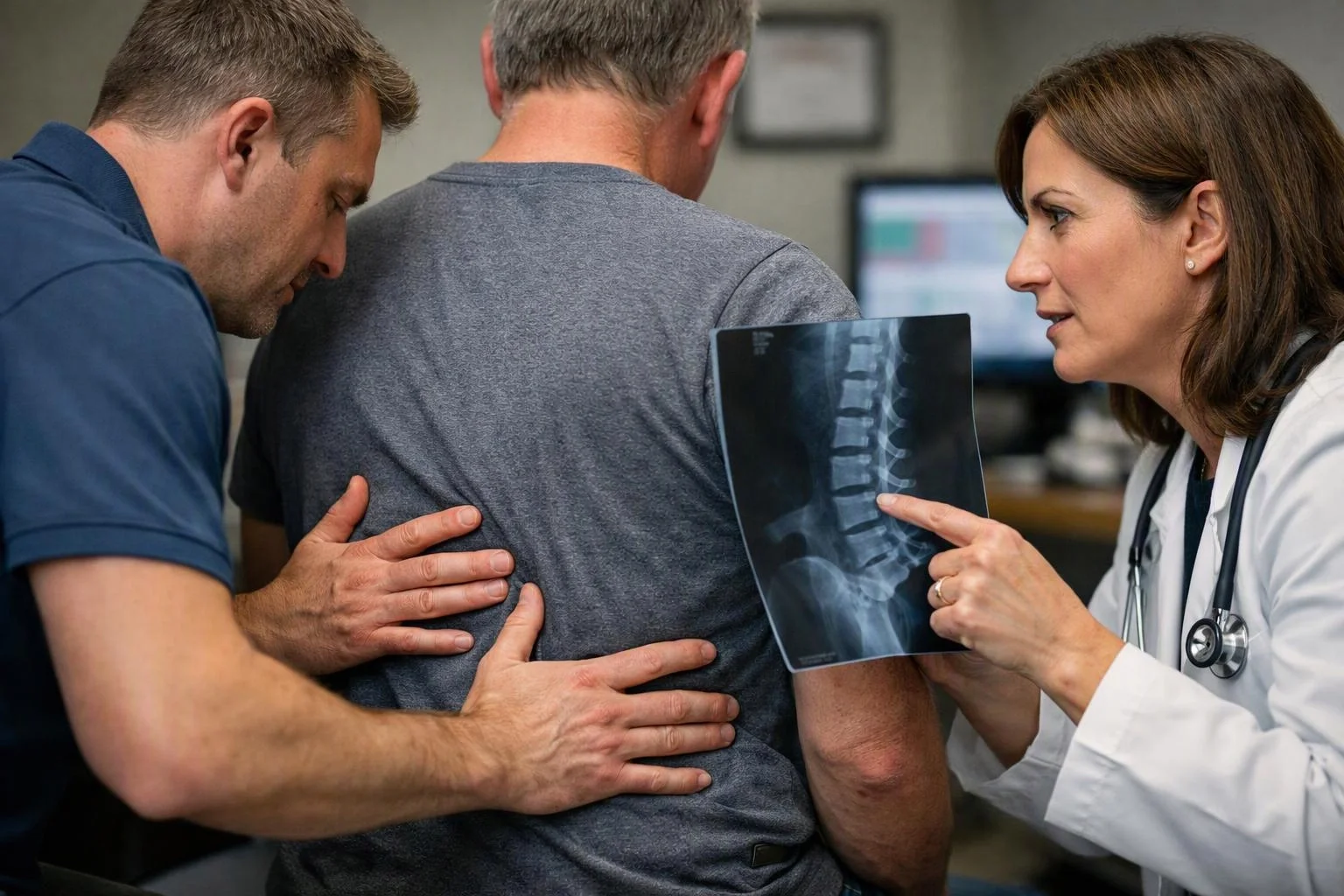
Best for: serious back pain causes, complex medical conditions, major trauma, or significant neurological changes.
When Back Pain Needs Medical Care Before Chiropractic Treatment
Medical care should come before chiropractic treatment when back pain occurs with serious neurological changes, major trauma, systemic illness signs, or another high-risk symptom.
Seek prompt medical attention for loss of bladder control, loss of bowel control, saddle numbness, or progressive weakness. These symptoms can signal a serious problem involving the nerves.
Medical evaluation should also come first after major trauma or when back pain occurs with fever, unexplained illness, or a cancer history. Do not delay medical care to try conservative treatment when these red flags are present.
How We Decide Whether Chiropractic Care Fits Your Back Pain
Arrowhead Clinic Chiropractor McDonough uses a safety-first screening process to decide whether chiropractic care fits your symptoms or whether care referral is more appropriate.
When the examination supports chiropractic treatment, we explain the care plan and monitor how your symptoms respond.
What Changes the Cost of Back Pain Care?
Back pain care costs depend on the evaluation, treatment plan, diagnostic needs, visit complexity, and coverage details; Arrowhead Clinic Chiropractor McDonough provides Free Estimates Available.
A back pain evaluation may cost more when symptoms require a more detailed history, physical examination, neurological screening, or coordination with medical care. The treatment plan and the type of visits needed also affect the total cost.
We explain what the recommended care includes and how diagnostic needs or insurance coverage may affect your responsibility. Request an exact quote through our contact page.
Which Back Pain Treatment Should You Choose?
Choose chiropractic evaluation for suitable musculoskeletal symptoms, medical care for warning signs or complex conditions, and coordinated care when both forms of evaluation are appropriate.
Our team can evaluate back pain, neck pain treatment needs, and symptoms that may involve sciatica. Sciatica treatment requires careful review when pain travels down the leg or includes numbness, tingling, or weakness.
Shared care can support pain management when a medical doctor is addressing a broader condition and conservative chiropractic care may help movement or function. A medical referral remains the safer choice when screening identifies a possible serious cause.
What Should You Do Before Your Back Pain Evaluation?
Preparing a clear symptom history helps our team connect your concerns with the right evaluation and care plan.
Questions About Choosing Back Pain Care
Can a chiropractor diagnose the cause of back pain?
Arrowhead Clinic Chiropractor McDonough can evaluate musculoskeletal causes of back pain through health history, symptom review, physical examination, movement assessment, and neurological screening. We refer concerns outside that scope for medical evaluation.
Can a chiropractor help with sciatica?
Yes, chiropractic care may help suitable sciatica symptoms when the examination supports a mechanical or musculoskeletal source. Radiating pain with progressive weakness, severe numbness, or other red flags needs medical evaluation first.
Should I see a doctor for back pain that travels down my leg?
Back pain that travels down the leg should receive careful evaluation because radiating pain can involve a nerve. Medical care should come first when the pain includes progressive weakness, major numbness, bladder changes, bowel changes, or other warning signs.
Can I see a chiropractor after a back injury?
Yes, a chiropractic evaluation may be appropriate after a minor back injury when serious symptoms are absent. Major trauma, suspected spinal injury, severe pain, weakness, numbness, or other red flags require medical evaluation before chiropractic treatment.
What symptoms mean back pain is an emergency?
Loss of bladder control, loss of bowel control, saddle numbness, progressive weakness, major trauma, fever, unexplained illness, and severe neurological changes require urgent medical attention.
Written by Dr. Robbyn Keating, DC.
Back pain treatment should begin with the safest evaluation for your symptoms. Contact Arrowhead Clinic Chiropractor McDonough to discuss your concerns and determine whether chiropractic care, medical evaluation, or coordinated care is appropriate.
Related Resources
Chiropractic Care for Sciatica and Radiating Leg Pain
What It SolvesChiropractic Care for Tension Headaches and Neck-Related Head Pain
What It SolvesChiropractic Care for Lower Back Pain: Causes, Symptoms, and Treatment Options
When You Need ItSigns You Should See a Chiropractor After a Car Accident